A vehicle can look clean and still have paint defects that become obvious in direct sunlight. The finish can become less clear and shinier due to swirl marks, micro-scratches, oxidation, water spots, and paint dulling, even if the car is washed regularly.
That is where paint correction comes in. That’s where Paint Correction comes into the picture. The process is not a conventional waxing or application of a temporary product to mask imperfections, but involves controlled machine polishing to smooth out some imperfections in the clear coat.
For Longmont drivers, the price can vary significantly depending on the vehicle, paint condition, and amount of correction required. Current local and Colorado-area pricing shows that light correction can start in the several-hundred-dollar range, while extensive multi-stage work can exceed $1,000.
What Is Paint Correction?
No car paint is perfectly flat from a microscopic point of view. This surface irregularity, caused by swirl marks, scratches, oxidation, and other blemishes, alters the light’s behavior off the surface of the clear coat and affects the way it reflects.
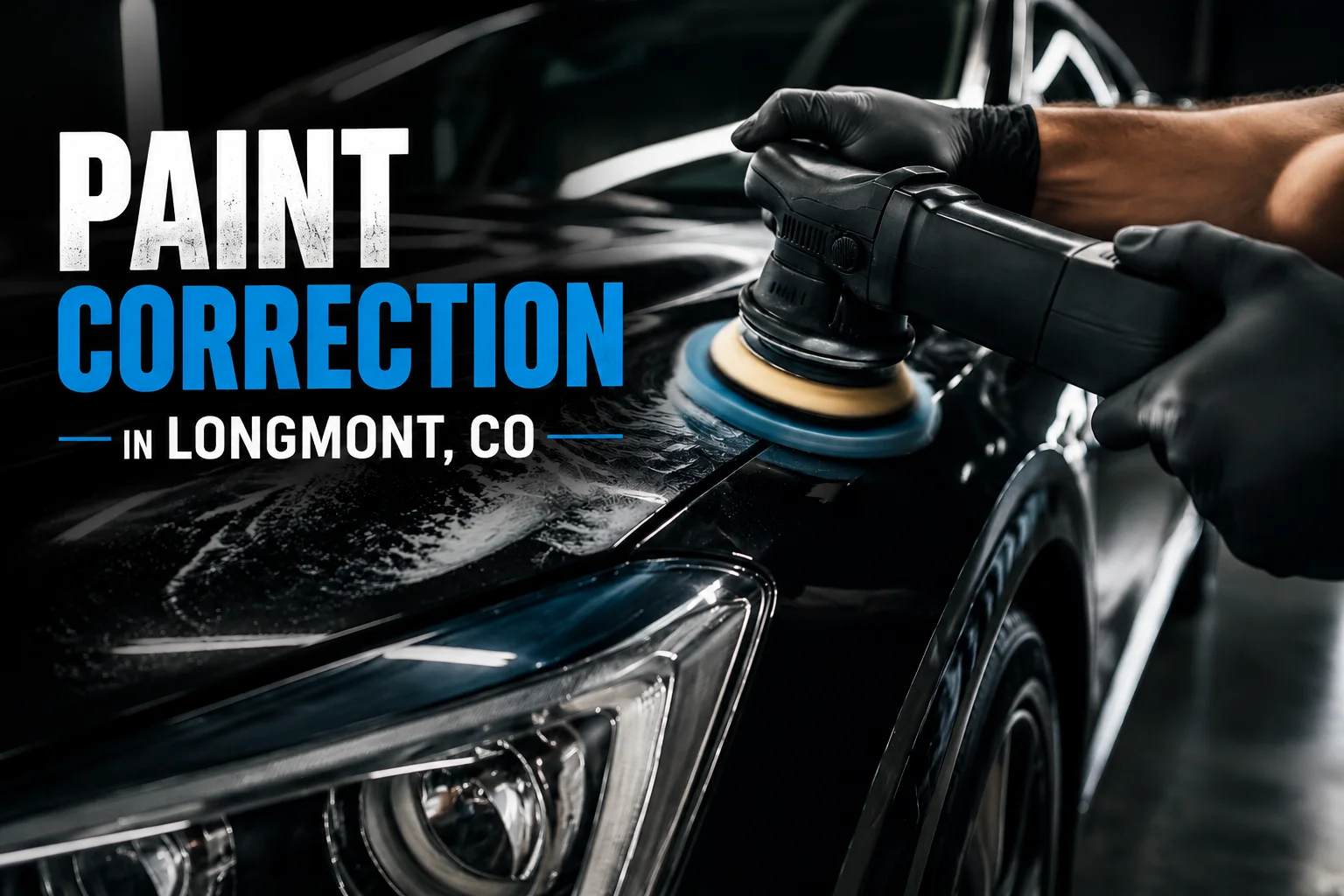
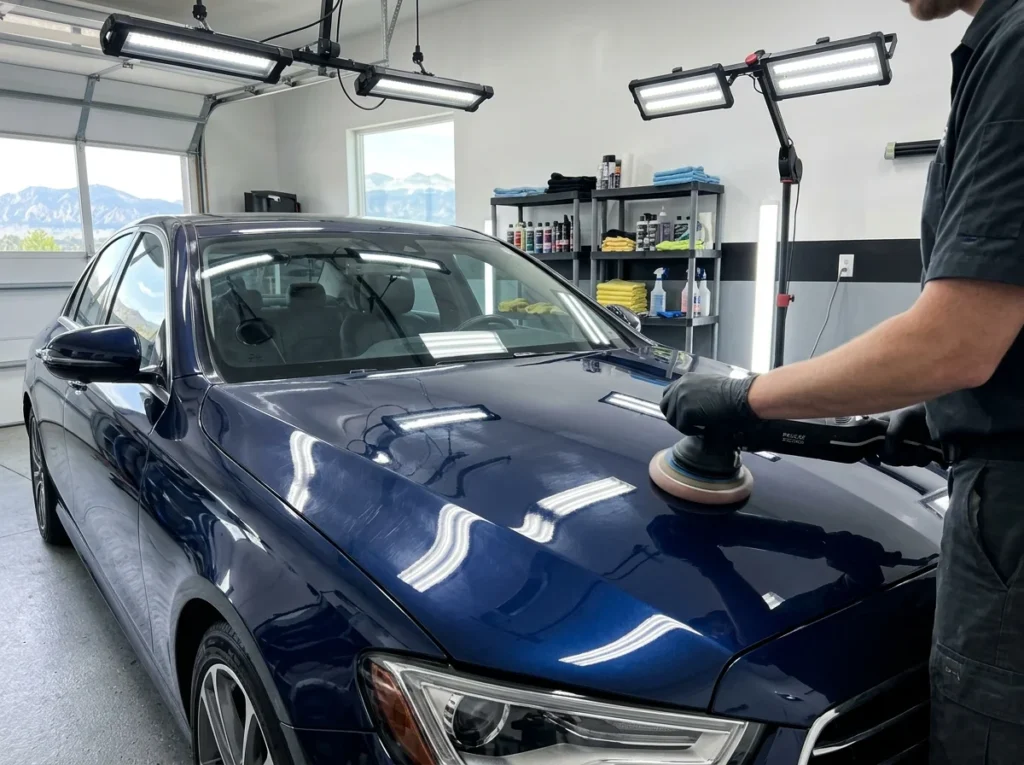
Paint correction for cars involves techniques and products that carefully polish the surface, such as machine polishing, polishing pads, and suitable compounds. This can be a one-step or multi-step correction and compounding/polishing process, depending on the degree of defects.
The purpose is to enhance the clarity and showcase the paint and remove just enough clear coat for a safe and effective appearance.
What Can Paint Correction Actually Fix?
It’s important to realise that paint correction has its limitations. It will be able to significantly correct defects that are either in or close to the clear coat, but it can’t restore every damaged panel to its original appearance.
A professional paint inspection helps determine what can realistically be corrected.
| Paint Defect | Can It Usually Be Corrected? |
| Light swirl marks | Often, yes |
| Micro scratches | Often, yes |
| Light oxidation | Often, yes |
| Dull paint | Usually improves significantly |
| Water spots | Depends on depth |
| Light surface scratches | Often, yes |
| Deep scratches through the clear coat | Usually no |
| Rock chips | No, typically requires touch-up or repainting |
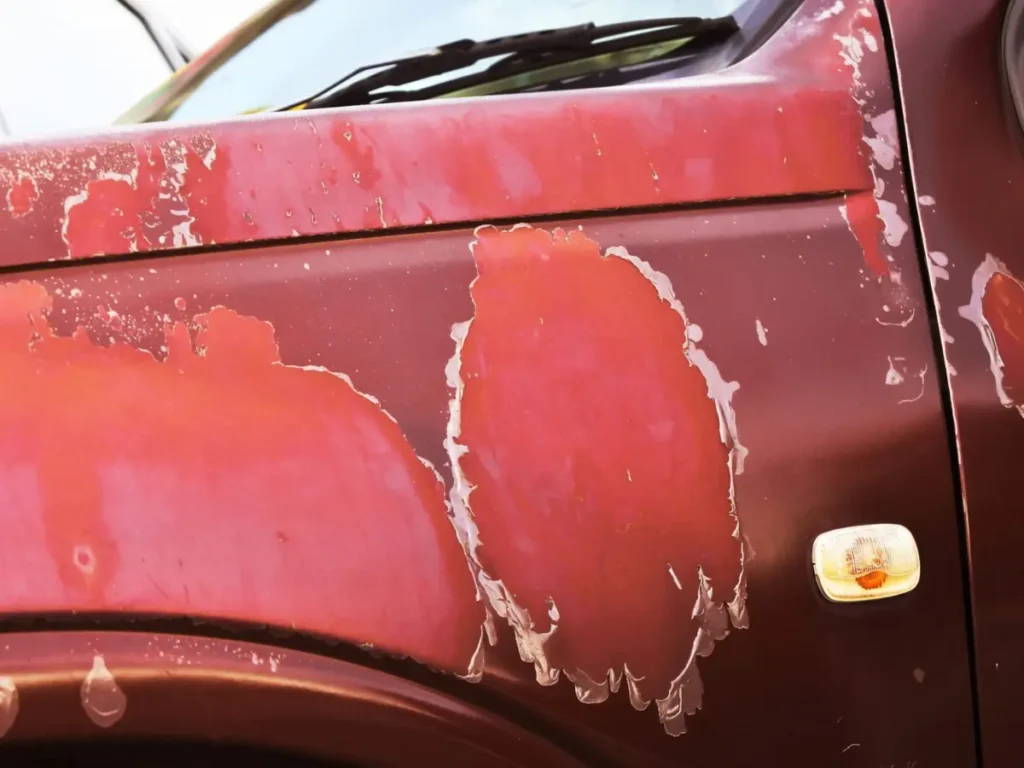
| Peeling clear coat | No, generally requires refinishing |
Any scratch that can be caught in a fingernail is not necessarily beyond repair, but more serious damage needs to be handled with care. It is not safe to restore the lost paint by machine when the scratch extends below the clear coat into the color.
The Paint Correction Process
Professional paint correction is more than simply using a buffer on the vehicle. Proper preparation and inspection are important because polishing contaminated or improperly prepared paint can create additional defects.
1. Wash and Paint Decontamination
The vehicle is thoroughly washed to remove loose dirt and surface contamination. Also, the bonded contaminants can be removed by using a clay bar treatment or other decontamination process, depending on the condition of the paint. This creates a cleaner surface for inspection and machine polishing.
2. Paint Inspection
The detailer inspects the paint with the proper lighting to look for swirls, scratches, haze, oxidation, and other defects. The thickness of the paint may also be measured as required. The thickness of the clear coat is limited, and the correction should be made to enhance the finish without taking unnecessary material off.
3. Test Spot and Correction
Use of a test area can assist in choosing the polishing pad, cutting compound, and finishing polish that will yield the desired results. For less severe defects, a one-step process can be sufficient. If there are heavier paint imperfections, a separate paint finishing polish may be required to enhance gloss and paint refinement after the compounding.
4. Final Inspection and Protection
After correction is finished, the finish is checked for any remaining defects and polishing residue. Depending on the service package and the owner’s objectives, a paint sealant, wax, or ceramic coating may be applied. Although protecting a product is not a replacement for paint correction, it can help maintain the improved appearance if protection is applied after a product is corrected.
Single-Stage vs. Multi-Stage Correction
Each car needs a specific amount of work. The nature of the painting depends on what kind of correction is needed.
Single-Stage Correction
Single-stage correction typically involves defect removal and finishing in a single polishing process. It’s a good option for cars that have light swirl marks and/or some minor oxidation or dull paint. The goal is improvement rather than removing every possible imperfection. Current Colorado pricing examples show one-step services commonly starting from roughly $200 to $700, depending on the provider and vehicle. You can also review current detailing pricing to compare available service packages.
Multi-Stage Correction
Multi-stage correction may include a cutting stage to correct more prominent defects and then 1 or more polishing stages to achieve a better finish. This process demands more workforce and typically results in a higher defect removal rate. Two-step correction runs from about $549 to $1,200, and extensive multiple-step work can cost $1,000 to $2,000 or more, depending on the vehicle and the condition of the paint.
How Much Does Paint Correction Cost in Longmont?
Paint correction is mostly a labor-intensive process, and there is no universal price. A compact vehicle with a few swirl marks would take a few hours to do, while a large SUV that has been neglected with respect to the paintwork job could take much longer.
Local Longmont pricing provides a useful picture. One Longmont detailing firm offers machine polishing and paint correction services that start at $200 and up, depending on the work. Another lists paint polishing at $500 and above, and more extensive paint correction at $1,250 and above.
A practical estimate looks like this:
| Level of Service | Typical Current Price Range | Typical Goal |
| Light enhancement | $200–$600+ | Improve gloss and reduce minor defects |
| One-step correction | $400–$700+ | Address light to moderate swirl marks |
| Two-step correction | $700–$1,200+ | Correct heavier swirls and surface scratches |
| Extensive correction | $1,000–$2,000+ | Significant defect removal and refinement |
These figures are general market estimates rather than guaranteed quotes. Larger trucks and SUVs, harder paint, severe oxidation, and extensive defect removal can increase the final cost.
| Quick Note: If a quote is dramatically lower than others, ask exactly what is included. Some services involve a quick enhancement polish, while a true multi-stage correction may include extensive decontamination, compounding, finishing, and inspection. |
How Long Does the Paint Correction Process Take?
The required time depends on the vehicle’s size, paint condition, and correction level. A light enhancement may take approximately 3 to 6 hours. A two-step process can take a full day or longer, while extensive multi-stage work may require 8 to 24 or more labor hours.
This doesn’t automatically mean that every vehicle stays at the shop for this exact amount of time. Other specifics can include scheduling, curing requirements for protective products, and more detailed services that will impact total turnaround time.
What Results Should You Expect?
Paint correction can create a huge difference in gloss, reflection, and paint clarity. Though no seasoned professional would promise that every flaw will vanish.
Most one-step service providers pursue good, not perfect, defect removal. One-step results in Colorado-area providers often report around 50%-75% defect reduction, while two-step services may reach approximately 80%-95%, depending on the condition of the vehicle and safe correction limits of the paint.
The optimal result is not necessarily the one that deletes the most clear coat. A balance between good looks and the longevity of the paint on your car. For drivers considering professional paint correction in Longmont, Izzy’s Auto Detailing LLC can help assess the vehicle’s paint condition and recommend an appropriate level of correction based on the visible defects and desired results.
Is Paint Correction Better Than Repainting?
Yes, but only when the original paint retains sufficient clear coat to be usable, and the damage is confined to correctable surface imperfections in ordinary situations. Repainting involves replacing damaged paint layers. Paint correction instead works with the existing automotive paint and clear coat.
That makes correction a useful option for swirl marks, light scratches, dullness, and oxidation. It is not a substitute for repainting panels with peeling clear coat, deep paint damage, or extensive missing material.
Is DIY Paint Correction Worth Trying?
A dual-action polisher is generally more forgiving than some other machine-polishing tools, but DIY correction still requires knowledge of paint condition, compounds, pads, pressure, and heat management. Using an overly aggressive cutting compound or incorrect technique can create haze, holograms, or unnecessary clear coat removal.
For someone correcting a small area or learning on an older vehicle, DIY polishing may be reasonable. For a newer, high-value, or heavily damaged vehicle, professional evaluation can reduce the risk of costly mistakes.
How Long Will the Results Last?
Since paint correction itself removes or reduces existing defects, those specific corrected imperfections won’t just come back on their own. But other marks and scratches may come from improper washing, automatic brushes, road debris, or just everyday usage. How long the look lasts relies largely on how the car is cared for afterwards.
Using clean wash tools, proper washing techniques, and suitable paint protection can help preserve the finish. Ceramic coatings can also provide longer-lasting protection and are commonly applied after correction when the owner wants to protect the improved paint surface.
Frequently Asked Questions
How much does paint correction cost in Longmont, CO?
Current local pricing can range from around $200 to $600 or more for lighter machine polishing, while more extensive correction in the Longmont market can start around $1,250. For two-step and multi-stage work, prices throughout Colorado usually drop from around a few hundred dollars to $2000 or more, depending on vehicle size and paint condition.
Can paint correction remove deep scratches?
Not usually if it goes through the clear coat down to the paint. Scratches can be polished to some extent, but missing paint requires touching up or repainting.
Is paint correction safe for every vehicle?
Not automatically. Additional considerations for aggressive correction include the physical condition of the paint and also the clear coat availability on a vehicle. With older cars and old repairs, you will want to be far more conservative, with the thin paint as well.
Is paint correction worth it before ceramic coating?
It can be. The solution Ceramic coating protects the surface area; it does not eliminate any existing swirl marks or scratches. Correcting the paint beforehand can provide a cleaner, glossier surface for protection.
How often can a car receive paint correction?
There is no fixed schedule because every correction removes a small amount of material from the clear coat. It is generally better to preserve the finish through proper washing and protection rather than repeatedly performing aggressive correction.
Final Thoughts
Paint correction is a must for any vehicle with swirl marks, light scratches, oxidation, or surfaces with a dull appearance and other correctable defects. The correct one depends on the state of the paint, the amount of clear coat to work with, and specifically how much defect removal is considered safe.
Longmont vehicle owners may need to pay anywhere from a few hundred dollars for relatively light machine polishing to $1,000 or more for extensive correction work. Comparing the benefits of the service is as important as comparing its advertised price.
If your vehicle’s finish has lost its clarity or is covered in visible swirl marks and scratches, Izzy’s Auto Detailing LLC can help determine what level of correction is appropriate and what results are realistically possible for your paint.