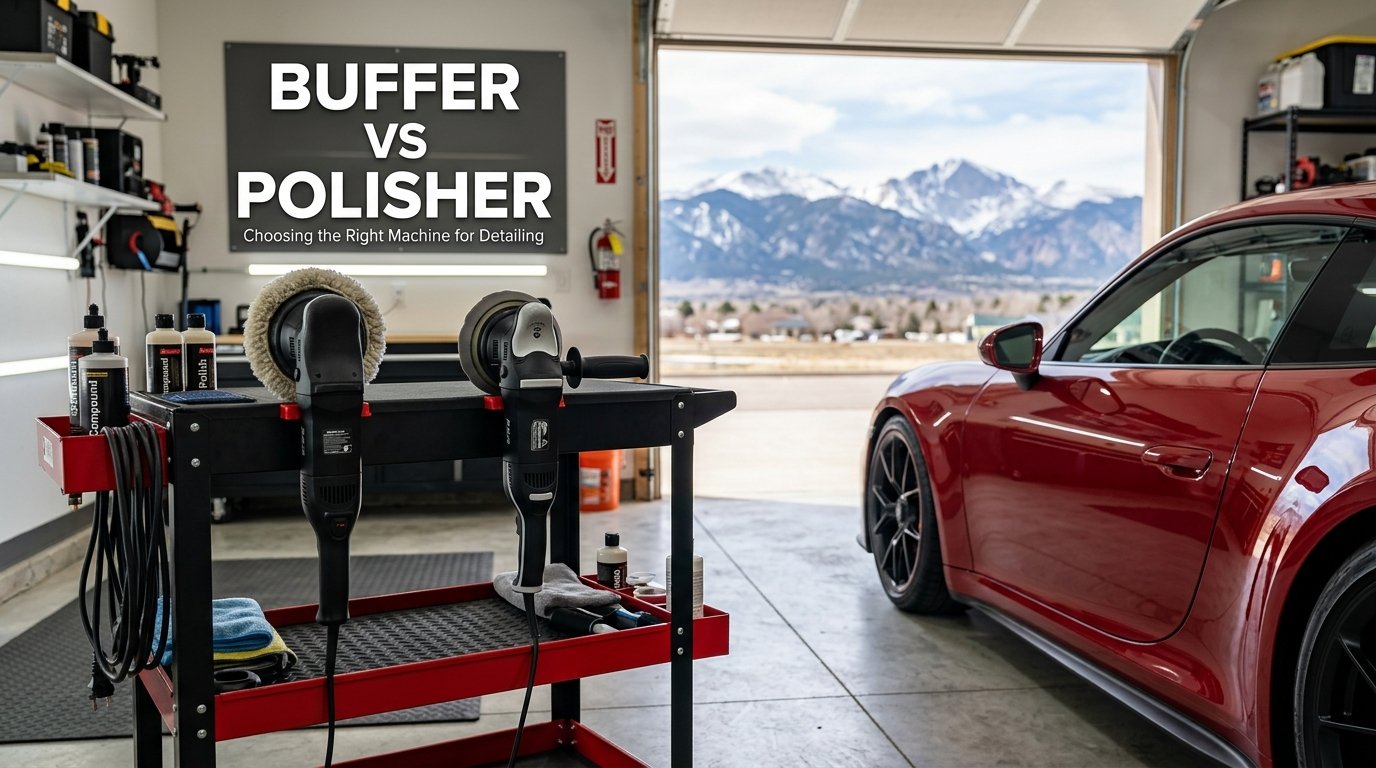
You’re looking at machine tools for car care. Should you buy a buffer vs polisher? They look similar but work differently. A car buffer is designed for applying wax. A car polisher is designed for removing swirls, scratches, and oxidation. Understanding the difference between buffer and polisher helps you choose the right tool for your needs. This guide explains how each works, when to use each, and which is safer for beginners.
The buffer vs polisher question matters because using the wrong tool causes problems. A buffer can’t remove swirls effectively. A polisher in wrong hands damages paint. Understanding how each tool works and when to use it helps you make smart decisions. If you need both tools, that’s fine. If you only need one, understanding their purposes helps you choose correctly.
What Is A Car Buffer And How Does It Work?
A car buffer is a machine that applies wax or sealant to your paint. The backing plate holds a polishing pad that distributes wax evenly. Buffers create gentle, consistent motion designed for product application rather than aggressive cutting. The goal is spreading protective products across your paint without removing paint or creating swirls.
Buffer or polisher for waxing almost always means buffer. Buffers are designed for this task. They move at speeds suitable for spreading wax without burning or damaging paint. Most buffers operate at lower speeds and lower aggressiveness than polishers. They’re appropriate for anyone with basic instruction because they don’t remove paint.
A quality car buffer makes wax application faster and more even than hand application. You get consistent coverage and better results than buffing by hand. Buffers also work for applying sealants or other protective products. The backup pad holds pads of various types depending on the product being applied.
What Is A Car Polisher And How Does It Work?
A car polisher is more aggressive machine designed for paint correction. Polishers remove paint layers to eliminate swirls, scratches, oxidation, and other defects. They use cutting pad or polishing pad with polishing compound or finishing polish to cut through clear coat. The goal is correction rather than protection.
Polishers operate at higher speeds and with more aggressive action than buffers. They’re capable of removing significant amounts of paint if used incorrectly. This power makes them effective for paint correction but dangerous in untrained hands. A polisher used carelessly damages paint permanently. Respect is necessary when using polishing equipment.
Dual-action polisher and rotary buffer are the two main polisher types. DA polisher refers to dual-action which uses random orbital movement making it safer for beginners. Rotary buffer refers to rotary polishers which spin in one direction and are more aggressive. Understanding polisher types helps you choose appropriate equipment if you decide to purchase.
What’s The Difference Between Dual-Action And Rotary?
Dual-action polisher uses random orbital movement meaning the pad orbits around the backing plate while also rotating. This combined motion prevents the polisher from digging in and removing too much paint. DA polishers are safer for beginners and for general car care. They still require training and caution but they’re forgiving.
Rotary buffer rotates in one direction continuously. This concentrated motion removes paint faster and is more aggressive. Rotary polishers are for experienced users or professional detailers. They require precise technique to avoid creating holograms or burnt spots. They’re dangerous in untrained hands. Most home users should avoid rotary polishers.
Dual-action polisher vs rotary buffer decision usually favors dual-action for home use. DA polishers are safer, more forgiving, and still effective for most paint correction tasks. Rotary polishers have their place in professional detailing but aren’t appropriate for beginners learning machine polishing.
When Should You Use A Buffer?
Use a car buffer for wax application and protective product application. Once your paint is corrected and clean, a buffer distributes wax or sealant evenly. The buffer makes application faster and more professional-looking than hand application. This is the primary use for buffers in home car care.
Buffers are appropriate for anyone who wants to protect their paint with wax. They’re not aggressive enough to damage paint. Even if you use one incorrectly, the damage potential is minimal compared to polishers. You can give a buffer to someone with minimal training and they’ll apply wax without causing problems.
A good buffer or polisher for waxing setup includes quality finishing pad for gentle application. The pad should be appropriate for the product being applied. Quality matters. Cheap pads shed lint or damage wax application. Invest in good pads for best results.
When Should You Use A Polisher?
Use a car polisher for swirl-mark removal, addressing light scratches, and correcting paint oxidation. If your paint has defects visible in sunlight, a polisher can help remove them. Polishers are for correction, not maintenance. If your paint is already perfect, you don’t need a polisher.
Best polisher for beginners is a dual-action polisher if you’re serious about learning machine polishing. Start with test spot on inconspicuous area. Use appropriate polishing compound for cut and finishing polish for final pass. Take time learning proper technique before working on visible areas.
Paint correction is aggressive work that requires knowledge. Different paint colors and clear-coat thicknesses require different approaches. Rushing or using wrong technique causes permanent damage. Learn proper technique first. Practice on test panels or inconspicuous areas before working on your car’s visible surfaces.
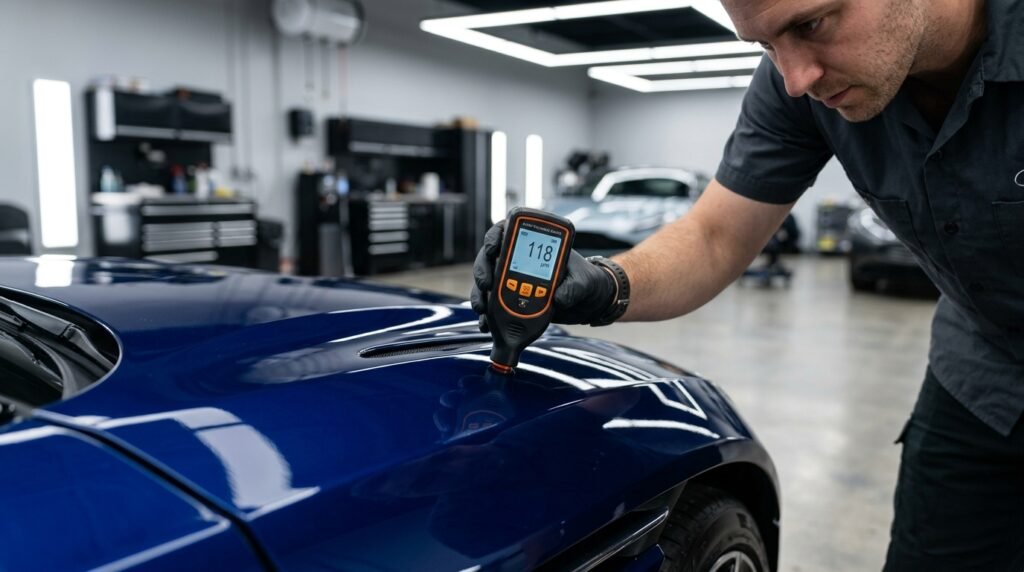
What About Clear-Coat Thickness And Paint Inspection?
Before using a polisher, check your clear-coat thickness with a paint inspection light or paint depth gauge. Clear coat is typically twenty to eighty microns thick. Aggressive polishing removes clear coat. If your clear coat is already thin, polishing removes it and damages paint. Checking clear-coat thickness prevents this problem.
A paint inspection light is an inexpensive tool that shows swirls and defects invisible in normal light. Before and after using a polisher, examine your paint under this light. You can see what you’re removing and when you’ve done enough work. This tool helps prevent over-polishing which damages paint.
Do a test spot on hidden area like inside door jamb before polishing visible surfaces. This tells you whether your technique works and whether the defects respond to your chosen polishing compound. Test spots prevent mistakes on visible surfaces. Take time testing. It saves problems later.
What Safety Considerations Matter?
Heat buildup is a concern when using polishers. The friction creates heat. Too much heat damages paint and clear coat. Working in sections and taking breaks prevents overheating. Don’t stay in one spot too long. Keep the polisher moving. Let the paint cool between sections if needed.
Beginner polishing safety means starting with lower speeds and gentler compounds. Dual-action polishers at lower speeds with finishing polish are safer than high speeds with cutting compound. Build skills gradually. Don’t try aggressive correction until you’ve mastered basic technique on inconspicuous areas.
Buffers create minimal heat and minimal damage risk. Polishers create significant damage risk if used incorrectly. Respect the equipment. Read instructions. Practice before working on your car’s visible surfaces. Consider professional help if you’re uncomfortable with machine equipment.
How Do You Choose Between Buffer And Polisher?
Ask yourself: why do I need this tool? If you want to apply wax, a buffer is appropriate and safer. If you want to remove swirls or light scratches, a dual-action polisher works if you’re willing to learn. If you want aggressive correction, hire professionals.
Most home car care needs can be met with a quality buffer for waxing. Polish-removing swirls is less common need. If you only do basic maintenance, buffer is sufficient. If you want to correct paint defects, either hire professionals or invest time learning machine polishing with appropriate equipment.
Consider your comfort level. Buffers are forgiving. Polishers require knowledge and skill. Be honest about your willingness to learn. Damaged paint is expensive to repair. Renting equipment first is smart before committing to purchase.
When Should You Hire A Professional Instead?
Paint correction that removes deep scratches or heavy oxidation might exceed what home equipment accomplishes. Professional detailers have expensive polishers, trained technique, and paint depth gauges. Their expertise prevents damage. Hiring professionals for major correction is often cheaper than damage repair from DIY mistakes.
If you’re uncomfortable with machine equipment or uncertain about technique, hire professionals. The cost is reasonable compared to potential paint damage. Professional work comes with expertise and experience. You get reliable results without learning curve.
Simple waxing you can do yourself with a buffer. Major correction you should consider hiring professionals unless you’re committed to learning.
Frequently Asked Questions About Buffers And Polishers
What’s the difference between a buffer and polisher?
A buffer is gentler and applies wax or sealant. A polisher is more aggressive and removes paint defects. Buffer or polisher for waxing is always buffer. Buffer or polisher for scratches depends on scratch depth. Light scratches might respond to polisher. Deep scratches need professional repair.
Is a dual-action polisher safe for beginners?
Dual-action polisher is safer than rotary polishers for beginners. It still requires proper technique and respect. Start on test spots. Learn proper technique before working on visible surfaces. Take time learning. Don’t rush into aggressive polishing without training.
Can I use a buffer instead of a polisher for swirl removal?
No. Buffers aren’t aggressive enough to remove swirls. They’re for product application only. You need a polisher for swirl-mark removal. Buffers maintain paint. Polishers correct paint. They’re different tools for different purposes.
What pad should I use with my buffer or polisher?
Use finishing pad for waxing and gentle work. Use cutting pad for aggressive correction. Polishing pad works for general polishing. Match pad aggressiveness to your task and compound. Different pads create different results. Quality matters significantly.
Do I need both a buffer and polisher?
Not necessarily. Most home car care can be done with buffer for waxing. If you want to remove swirls, you need polisher. If you only detail occasionally, buffer is sufficient. If you detail regularly, both tools expand your capabilities.
Where can I find recommendations for specific buffer or polisher models?
Check our comprehensive guide to best buffers and polishers for detailed product recommendations and reviews. That guide covers specific models, features, and pricing to help you choose equipment that fits your budget and needs.