You vacuumed the floors and wiped down the dash. Then you open the door the next morning and that sour smell hits you all over again. Spilled coffee and old smoke leave residue behind. So do wet dogs and leaky door seals. That residue keeps giving off odor long after the surface looks clean. A quick wipe-down won’t reach it. The mess has already soaked into fibers and padding where a cleaning cloth never goes. An air freshener just stacks a nicer smell on top of a bad one. Real car interior odor removal starts with one plain question. Where is the smell actually coming from? Answer that first, and the right fix gets much easier.
Why Do Bad Smells Remain Inside a Car?
Think of your car’s interior as one big sponge. Seat fabric soaks up whatever lands on it. Carpet does the same, and so do the floor mats. Some of it comes back as a smell for weeks. The cabin is also a small closed space, so odors have nowhere to go.
Odors Can Become Trapped in Upholstery and Carpets
Liquid doesn’t stop at the top layer. A spilled milkshake or a pet accident wicks into the seat padding or carpet backing. Smoke leaves a sticky film on every fiber it touches. The fabric can look spotless while the foam below still holds sugar or tar. Summer heat wakes it up.
Moisture and Poor Ventilation Can Make Odors Worse
Water makes almost every odor worse. Snow and slush tracked inside can get trapped under floor mats, keeping carpets damp for days. Soaked mats and slow seal leaks do it too. A clogged cabin filter can’t clean the incoming air well. Not every musty smell means mold. Ongoing dampness still needs a real fix instead of fragrance.
How Should You Find the Source of a Car Interior Odor?
Good car interior odor removal starts with a little detective work. Grab a flashlight and take your time. Look before you scrub. Ten minutes of searching beats hours of cleaning the wrong spot. Your nose helps too. Move slowly through the cabin and notice where the smell gets stronger.
Inspect Seats, Carpets, and Floor Mats
Start where people sit and step. Seat seams catch crumbs and spilled drinks. Pet hair collects there too. Press a dry paper towel onto any suspicious spot. If it comes up damp or discolored, you’ve found a lead. Next, pull every floor mat out. Water and grit love to hide underneath.
Check Storage Areas and Less Visible Interior Surfaces
Open everything up. Check the trunk first. Then the cup holders and door pockets. Shine your light under each seat. A forgotten fry or a dripping grocery bag can hide for months. The odor might seem strongest up front. The real source might sit in the spare tire well.
Notice When the Smell Comes From the Air Vents
Pay attention to timing. Does the smell start when the fan or AC kicks on? If so, moisture or debris in the HVAC system or cabin filter may be involved. That clue narrows things down. It doesn’t diagnose anything. A sweet or burning smell belongs with a qualified mechanic.
What Are the Best Car Interior Odor Removal Methods?
The right method depends on what caused the smell. It also depends on what the mess soaked into and how far it went. A soda spill on a rubber mat takes five minutes to fix. Pet urine in seat foam is a much bigger job. Match the method to the problem.
Vacuum and Deep Clean the Interior
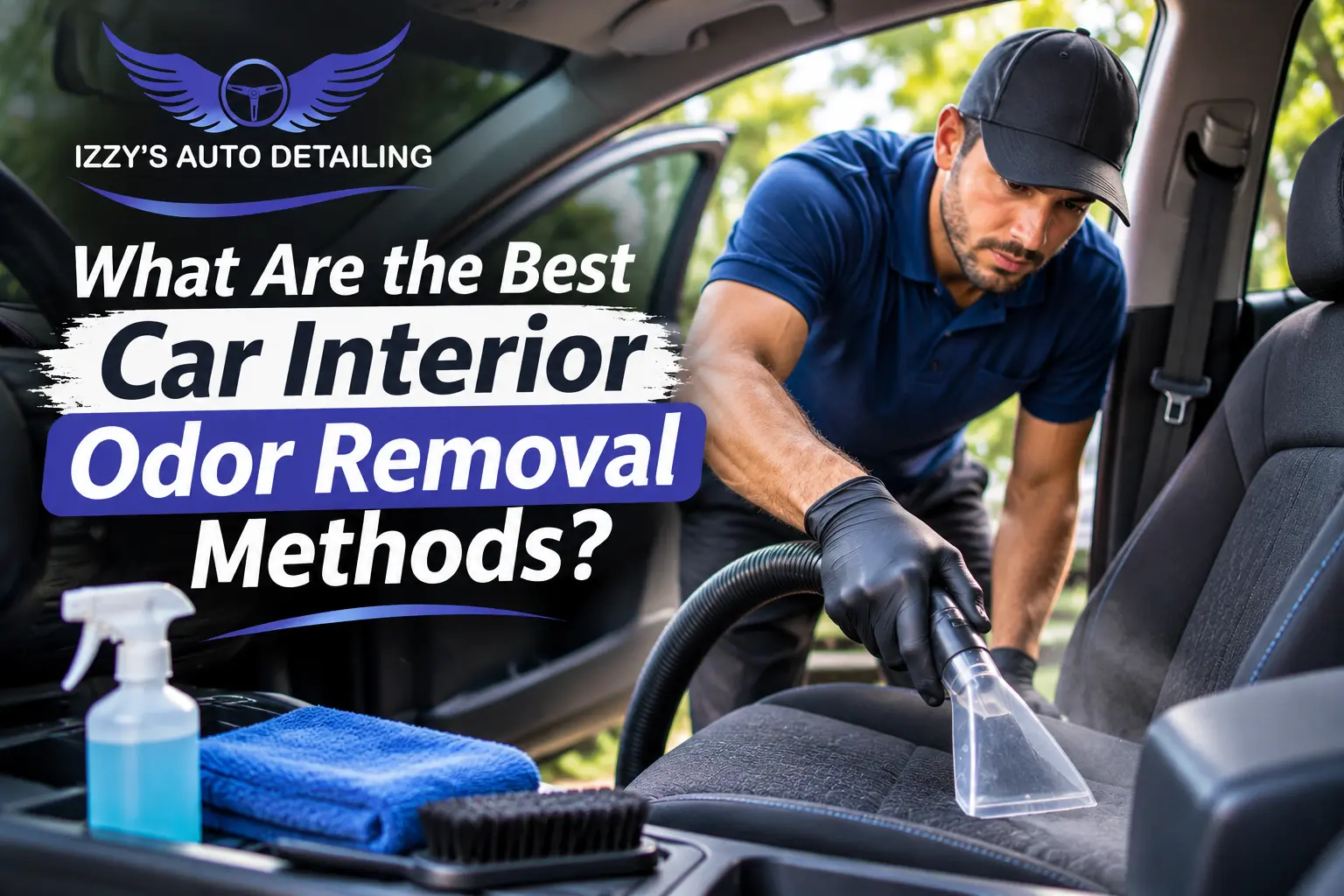
Vacuum first, every time. Crumbs and pet hair hold odor. A detailing brush loosens what’s stuck in the carpet. Next, work in an upholstery cleaner made for your material. Pull it back out with a wet/dry vacuum. A carpet extractor rinses and pulls out dirty water in one pass. Don’t soak the fabric.
Use Suitable Treatments for Food and Drink Spills
Get the residue out. Blot fresh spills with a clean towel. Scrubbing only spreads them. Leather and cloth need different cleaners, so read the label. Once coffee reaches the padding or seat foam, the area needs flushing and extraction. Let it dry completely afterward. Otherwise, you may trade a food smell for a musty one.
Treat Pet Odors and Other Organic Contamination
Pet urine and vomit are organic messes. Regular soap may lift the stain but leave the smell. Enzyme-based cleaners break that material down. Use them as directed on fabrics that allow it. The catch is reach. A light mist won’t touch urine that soaked into the foam. Saturated seats may need a pro.
Remove Smoke Odor From Interior Surfaces
Smoke coats the whole cabin. It settles on the headliner and glass. It clings to plastic trim and seat belts. Wipe hard surfaces with an interior cleaner, then treat the fabric. Go gentle on the headliner. Too much moisture can loosen its adhesive. Heavy smoke often takes more than one round.
Address Musty Smells and Moisture Problems
Find the water before you fight the smell. Clean the wet carpet or mats. Then dry them fully with the doors open and a fan running. Wet again after every rain? That points to a leak or clogged drain for a repair shop to find. Long-soaked padding may need replacing.
What Should You Do About Odors Coming From the HVAC System?
Some smells only show up when air is moving. The cabin seems fine with the fan off. Then you switch it on and get a blast of stale air. That pattern tells you where to look. The problem likely sits along the air’s path into the cabin.
Inspect and Replace the Cabin Air Filter When Needed
Check the cabin air filter first. An overdue one clogs with dust and debris and can hold odors. Your owner’s manual tells you when to replace it. Many vehicles can also take an activated carbon filter. That type absorbs some outside odors like exhaust. It won’t fix smells from dirty carpet, though.
Clean the Ventilation System When Necessary
Look deeper if a new filter doesn’t help. The AC evaporator sits behind the dash. It gets cold and wet whenever the air conditioning runs. Moisture there can cause that classic musty smell. Some vent treatments target this area when used as directed. If the smell keeps returning, call a qualified technician.
Do Odor Neutralizers and Deodorizing Treatments Really Work?
They do, but only as the last step. A neutralizer is designed to react with odor molecules so the smell fades. Fragrance just covers one smell with a stronger one. Neither one works if residue or moisture remains. Pros sometimes use ozone or hydroxyl machines on heavy smoke. Never run ozone with people or pets inside, and air the car out afterward. Hydroxyl units are considered gentler but still need the maker’s guidance.
How Can You Prevent Car Interior Odors From Returning?
Most odor problems start small. A wrapper slides under a seat. A damp mat stays in the car over a long weekend. Each seems harmless at first. A few warm days later, they turn into a smell you can’t shake. Some simple habits keep that from happening.
- Toss food wrappers and trash often.
- Blot fresh spills before they soak into fabric.
- Vacuum the seats and carpet when they need it.
- Dry wet floor mats all the way through.
- Treat pet messes right away.
- Replace the cabin air filter on schedule.
- Track down musty smells instead of covering them.
When Should You Consider Professional Car Interior Odor Removal?
Some smells beat routine cleaning. Call a pro for stubborn smoke or pet accidents that soaked into the seats. Spills that reached the padding count too. So does any smell that survives a proper cleaning. A detailer can spot which materials are affected and use commercial extraction to pull out what home tools miss. Leaks and HVAC faults need a repair shop instead.
Frequently Asked Questions
The quick answers below cover a few common questions about smells that won’t leave. The best approach still depends on the source and how deep it goes. If you’re not sure where to start, go back and work through the inspection steps above in order.
What Is the Best Way to Remove a Bad Smell From a Car?
Find the source, then remove the residue. Clean the affected fabric or carpet with a product made for that material. Let everything dry fully before you close the car. Does the smell only appear when the fan runs? Then look at the cabin filter and vents instead.
Why Does My Car Still Smell After Cleaning the Interior?
Something is probably still hiding below the surface. Check the padding and seat foam first. The trunk and the HVAC system are the next places to look. Moisture is another common culprit. If water keeps getting into the cabin, the smell will keep coming back no matter how often you clean.
Does Replacing the Cabin Air Filter Remove Car Odors?
Sometimes. A new filter helps when the old one was part of the problem. It’s a simple first step if the smell comes through the vents. It won’t touch odors from dirty upholstery or carpet spills, though. It also won’t fix a musty evaporator or other HVAC parts.
Final Thoughts
Lasting odor removal follows a simple order. Find the source and clean the material holding it. Dry everything that got wet, and deal with the vents if they’re involved. Izzy’s Auto Detailing LLC is a mobile detailing company based in Longmont that comes to your home or workplace. Its interior detailing service cleans and sanitizes the surfaces inside your car. You can also request smoke odor removal when you book. If you are located in Longmont or nearby areas across Northern Colorado, call Izzy’s at 720-266-1760 to discuss your mobile detailing needs.