You wash your car, dry it, and then step back, but something still does not seem right. The color looks dull, and fine lines appear when the sun reflects off the hood. A clean surface does not mean a healthy surface. There are some problems that lie on the surface of the paint and others that are embedded. This post will discuss the things you should know if you’re thinking about car paint correction in Longmont, CO, such as swirls, dullness, holograms, water-spot etching, and lost paint clarity. With knowledge of dirt and real clear coat damage, the next step is much easier to take.
Paint Changes That May Signal Your Car Needs Attention
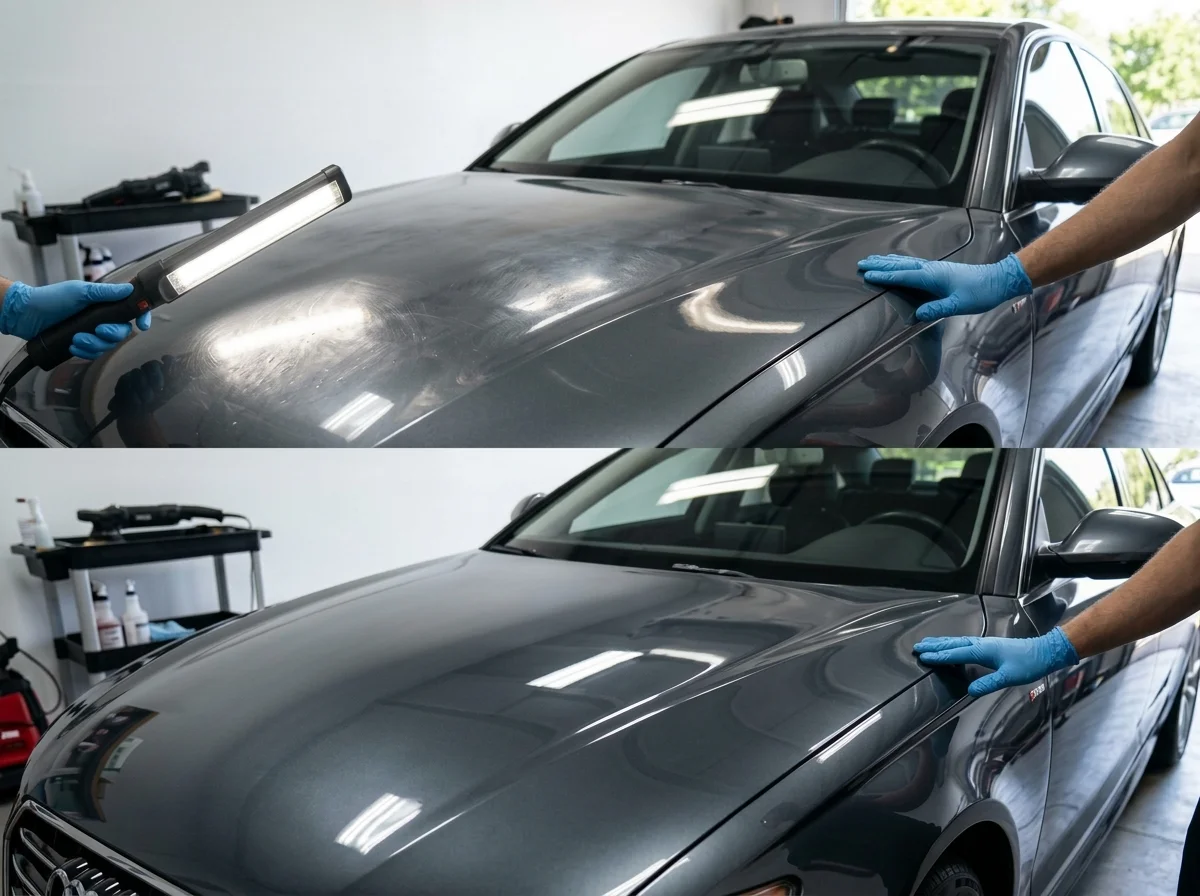
Check the car when the paint is clean and dry. Good lighting makes a big difference. Sunlight works well, but you can also use a bright flashlight and hold it at an angle against the panel. Some defects are hard to see in the shade or on cloudy days. Start with the hood, roof, and trunk because these areas get a lot of exposure. Look at the paint from different angles, then watch for these changes:
- Swirl marks
- Fine scratches
- Holograms
- Dull or hazy paint
- Water-spot etching
- Uneven paint clarity
Swirl Marks and Fine Scratches Keep Showing Up
Swirl marks are small lines that often look like spiderwebs across the paint. They may not stand out in the shade, but they become much easier to see when sunlight hits the car. The light reflects off the tiny marks and makes the paint look less clear. On dark cars, the finish may look gray. On lighter colors, it can make the paint look dirty or dull.
These marks often come from washing and drying the car. Automatic car washes may cause them when brushes or cloth strips rub dirt and grit against the paint. Washing at home can also cause scratches if the mitt or towel is dirty. A towel dropped on the ground and used again can do the same. The damage may be light or deeper, but another wash will not remove it. Soap cleans the surface, while scratches need the paint to be corrected. For lighter swirls and surface imperfections, machine polishing can help refine the finish and improve paint clarity.
Your Paint Looks Dull Even After Washing
Dirty paint and dull paint are different problems. Dirt sits on the surface and leaves with a proper wash. Dull paint stays flat and cloudy on a spotless car because tiny clear coat imperfections scatter light instead of reflecting it cleanly. The result is a faded appearance, less depth, and a paint finish that no longer looks wet.
Owners often ask why a car’s paint is losing its gloss. Years of sun exposure, repeated washing wear, and accumulated marring all play a part, and the mix varies by vehicle. A quick check: look at a building or tree line in the hood’s reflection. Soft, smeared edges point to poor paint clarity, while crisp edges suggest the finish is holding up.
Holograms and Uneven Reflections Show Up Under Light
Paint holograms show up as hazy, rainbow-tinted trails, often in arcs or bands that follow the path of a polisher. Strong sun or a work light reveals them, and they can disappear completely in the shade. They usually come from improper buffing, meaning a pad, compound, or technique that did not match the paint, though not every case has a single cause.
Because those marks change how light travels across the panel, the reflection looks wavy or patchy instead of clean. That uneven surface appearance can make the whole automotive finish look worse than the paint really is. Unlike dirt or contamination, holograms are part of the surface, so washing or wiping the panel changes nothing.
Water Spots Stay Even After the Car Is Clean
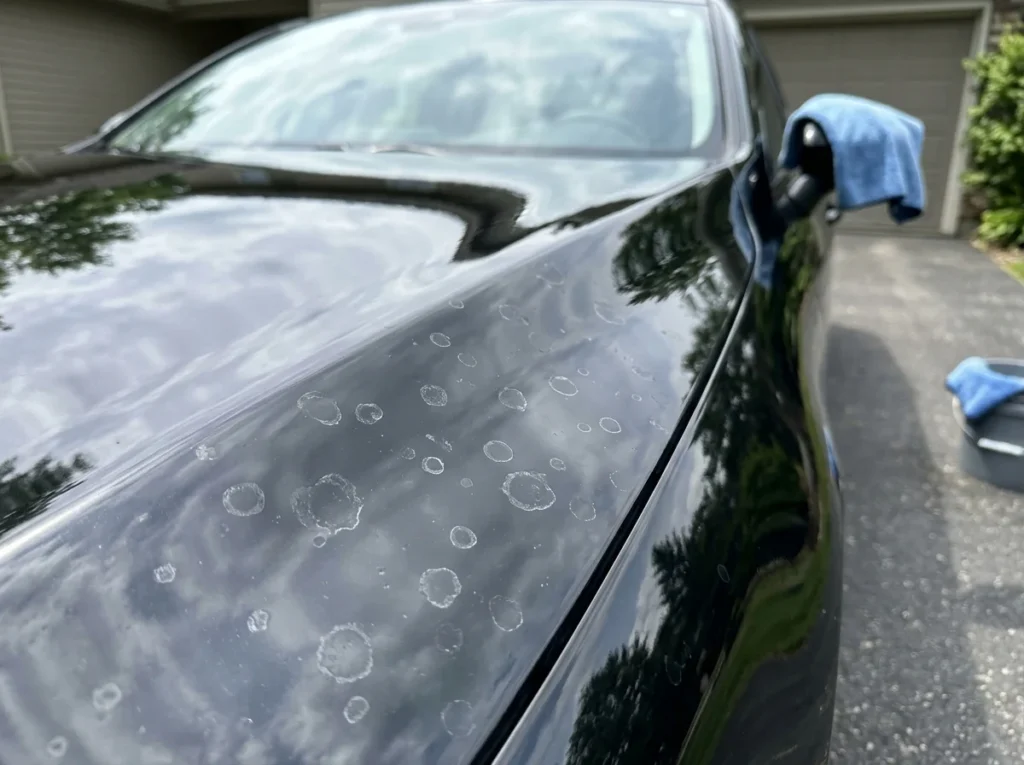
The appearance of water spots starts with minerals left behind when droplets of water evaporate on the paint. Fresh spots are surface contamination that can usually be removed with a good wash or gentle cleaning. If they remain on the paint long enough, sunlight can cause the minerals to etch into the clear coat. Water spot etching can leave small crater-like marks that will not come off with soap and water alone.
| Pro Tip: Clean the spot again with quick detailer and a fresh microfiber, then recheck it under bright light. If the mark fades, it was likely surface residue. If an outline remains, it may be etched, though only an inspection can confirm how deep it goes. |
When Cleaning Is No Longer Enough
Professional correction becomes a real option when problems survive a proper wash. Swirls and fine scratches that remain visible in direct light, haze that never lifts, etching from water spots, holograms, and poor paint clarity all point to surface defects in the clear coat rather than dirt on top of it. Washing again won’t change them, and wax may only hide them for a while.
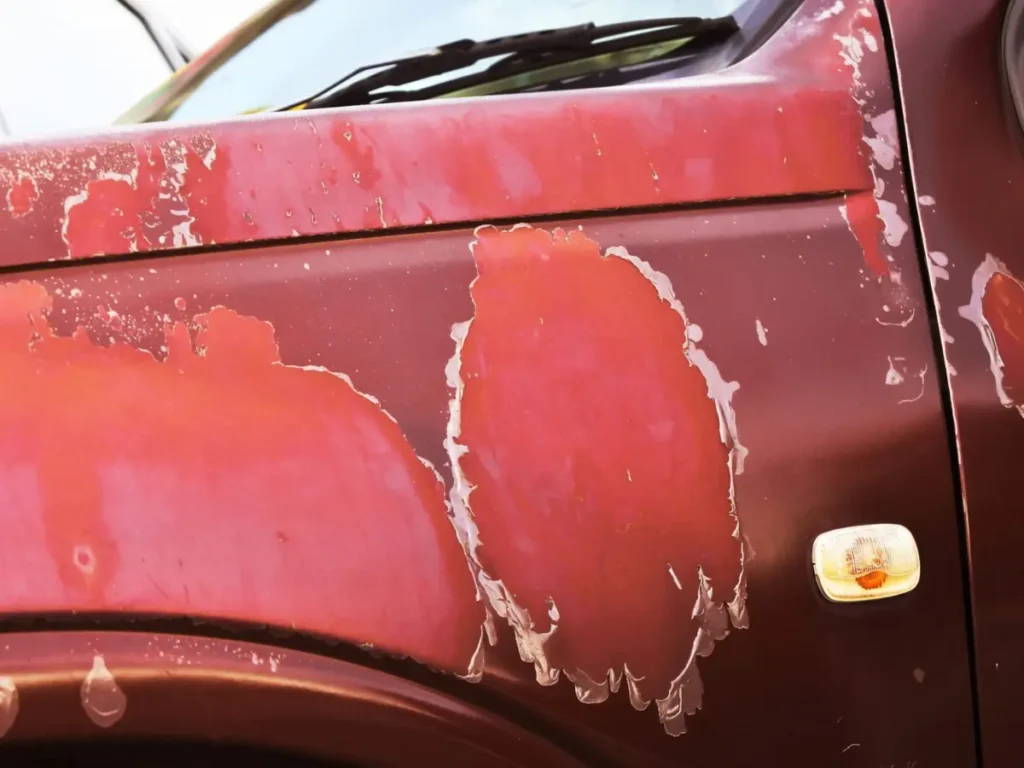
Not every paint problem belongs in a correction. Very deep scratches, peeling clear coat, and exposed primer generally call for a different repair, such as touch-up work, spot repair, or refinishing, and the right answer depends on the damage. Correction also cannot promise that every defect disappears, because it can only work with the clear coat that is still on the vehicle.
How Do You Know Which Level of Paint Correction Your Car Requires?
Correction is not one fixed treatment. The amount of work depends on the actual paint condition, how deep the defects go, the characteristics of the paint itself, and the finish the owner wants. That is why professional paint correction in Longmont should begin with an inspection, not a preset package.
Single-Stage Correction
Single-stage correction generally suits lighter defects. One professional polishing step can reduce light swirls and marring and improve gloss when heavier work is unnecessary. It is sometimes described as paint enhancement, since the goal is a clearer finish more than deep defect removal.
Multi-Stage Correction
Multi-stage correction is used when defects are heavier or spread across more of the vehicle. It is normally the more aggressive step to remove deeper marks, followed by more delicate steps to clear and smooth the surface. Results are still subject to the availability of clear coats.
When Should You Get Paint Correction?
The easiest way to determine whether or not the car requires paint correction is to wash and properly dry the car, then look at each panel in strong light. If there are visible swirls, fine scratches that affect the paint clarity, hazes, etching, holograms, or poor paint clarity, then it is time to dig deeper. If these signs persist, a professional evaluation is necessary. A detailer can inspect the paint and determine the depth of the paint defects and suggest a degree of vehicle paint correction that is appropriate for the vehicle.
Paint Correction Before Ceramic Coating
Paint correction and ceramic coating are different services. Correction addresses defects already in the paint, while a coating adds a layer of protection on top. A coating will not remove scratches or swirls, and the defects stay visible beneath it. That is why paint correction before ceramic coating is so important: protection performs best on a surface that has been effectively prepared. Exterior detailing can also include paint decontamination, polishing, and protective treatments as part of preparing the vehicle’s exterior.
FAQs
How do I know if my car needs paint correction?
Wash and dry the car, then check it in direct light. Swirls, fine scratches, haze, etching, or holograms that remain suggest the defects are in the clear coat. A professional inspection can confirm whether they suit correction.
Can paint correction remove swirl marks?
Often, when the swirls are within the clear coat’s correctable depth. Light to moderate swirls usually respond well, while deeper marks may improve without disappearing entirely.
Can paint correction restore gloss?
It can improve gloss when dullness comes from surface defects. If the clear coat itself is failing, correction will not bring the shine back, and a different repair is needed.
Is paint correction the same as polishing?
Not exactly. Polishing is a step that uses a pad and abrasive to refine the paint. Paint correction is the wider process of judging the paint’s condition and choosing the stages needed to reduce defects.
Should I get paint correction before ceramic coating?
If the paint has visible swirls or haze, usually yes, since a coating will not remove them. On paint that is already in good shape, preparation may be enough.
Final Thoughts
Swirl marks, fine scratches, dull or hazy paint, holograms, water-spot etching, and poor paint clarity are easiest to spot after a proper wash in strong light. When they remain, the cause is usually in the clear coat rather than on top of it.
Izzy’s Auto Detailing LLC is based in Longmont, CO, and offers paint correction for vehicle owners dealing with these problems. The service is meant for suitable surface-level defects such as swirls, fine scratches, haze, and etching. The right approach depends on the paint’s condition, and serious damage or a failing clear coat needs a different repair.
If your paint still looks off after a wash, contact Izzy’s Auto Detailing LLC to talk about your vehicle’s paint condition and the paint correction service.