If you leave a car outside in Longmont for several years, changes in the paint can become easier to notice. The hood may lose some of its deep shine, while the roof can start looking lighter than the doors. Colors that once looked even and vibrant may gradually look dull or uneven.
Car paint fading in Longmont, CO, can happen for several reasons. Strong sunlight, outdoor exposure, road salt, dirt, and the way a vehicle is washed can all affect the finish over time. This guide looks at what causes that change, the early signs to watch for, and the steps that can help protect your paint.
What Causes Car Paint to Fade in Colorado?
Paint doesn’t fade overnight. It’s the slow accumulation of heat and airborne contaminants working against a finish that was never designed to last forever without some upkeep.
Strong UV Exposure and Colorado’s Elevation
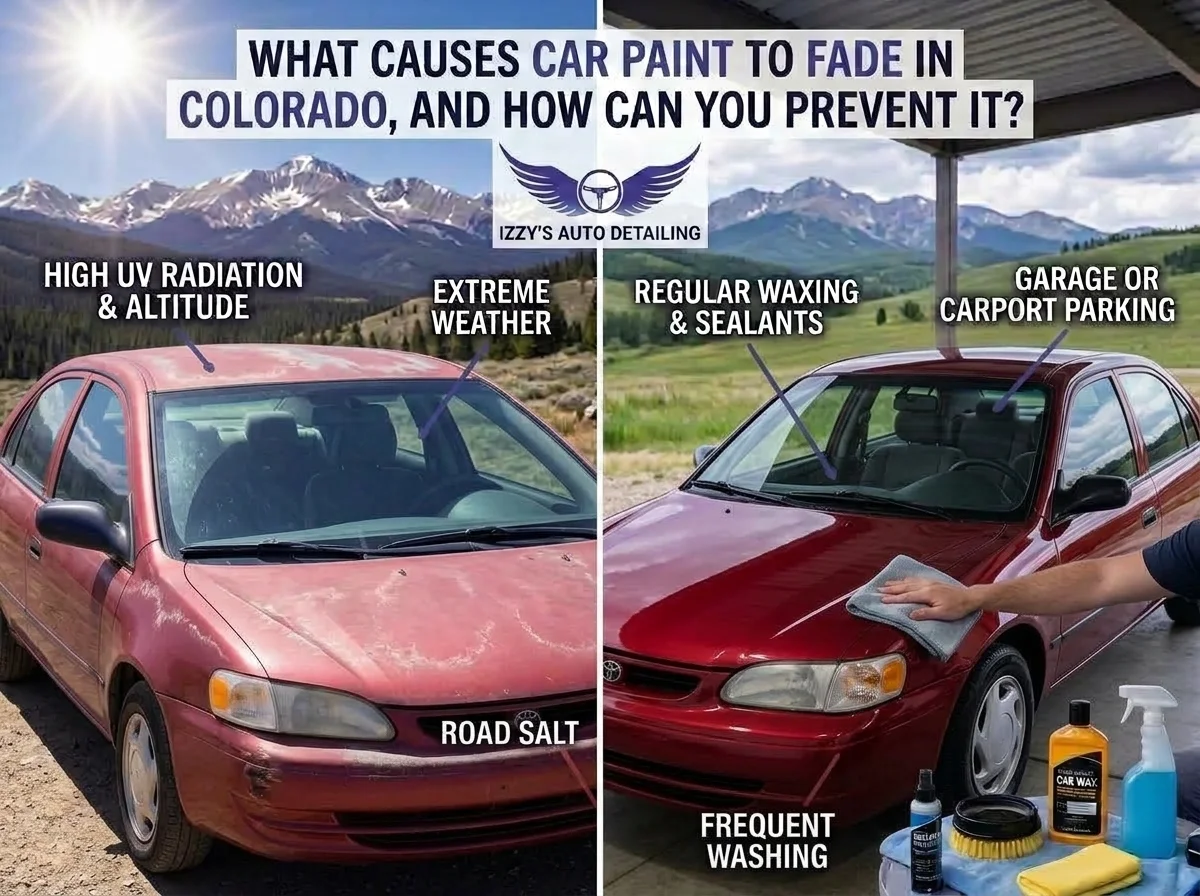
Long-term exposure to UV rays is the biggest cause Colorado car owners face with their vehicle’s paintwork. The UV rays degrade the color and cause it to fade, leading to duller and less vibrant colors. Longmont is at an altitude high enough that there just isn’t as much atmosphere covering the car when it is parked as there is when it is parked at sea level.
This is not to say that fading is only caused by elevation. This is not to say that fading is only caused by elevation. It means that the solar radiation reaching the car here can contain more UV radiation, and the effects build up over months of exposure. The reason for this is that the first sun damage to car paint in Longmont can be seen on horizontal surfaces.
A flat hood or roof receives more direct sunlight than a vertical door panel, so it can receive more UV exposure over time.
Oxidation and Clear Coat Deterioration
Underneath the shine, every factory paint job relies on a clear coat to lock in color and add protection. Once UV exposure starts breaking that layer down, oxidation sets in, and it doesn’t look subtle for long. The surface loses its gloss first, then develops a chalky, almost dusty texture that you can sometimes feel with your hand.
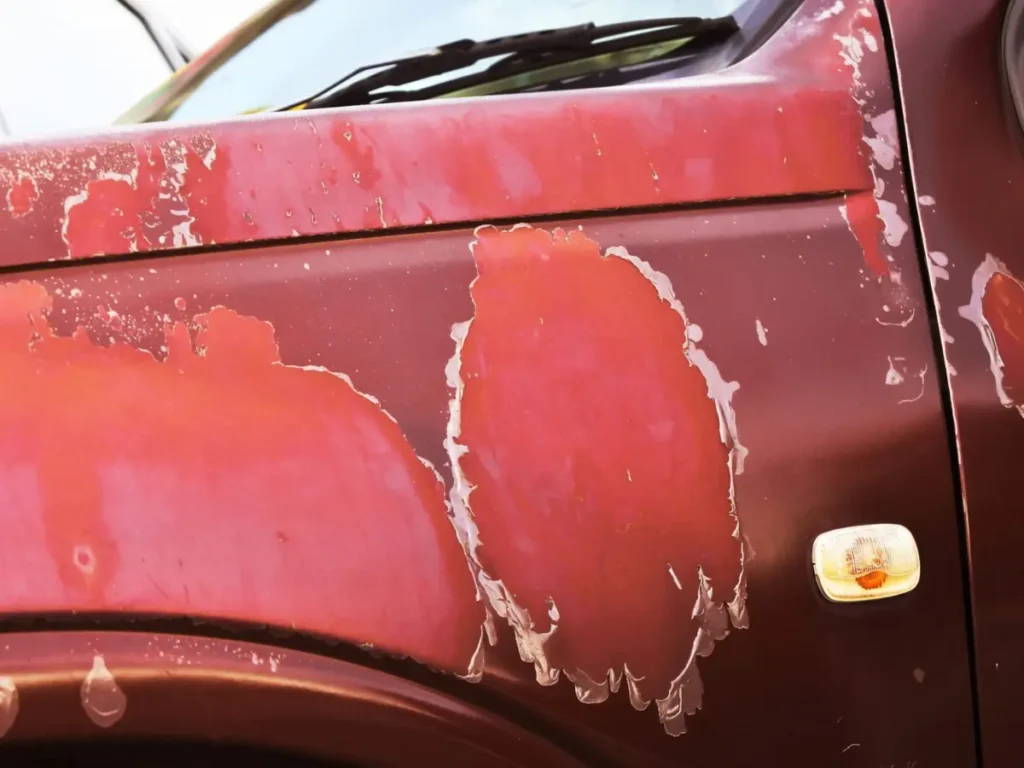
Left unaddressed, that pigment degradation deepens, and the color underneath starts to look washed out rather than faded evenly. At this stage, car paint restoration may be needed to improve the color and gloss if the underlying paint is still salvageable. In the worst cases, the clear coat separates from the base color entirely, a condition known as clear coat failure. At that point, you’re no longer looking at simple discoloration but a structural breakdown of the paint system itself.
Road Salt, Dirt, and Environmental Contaminants
De-icing salt and treated road grime are common hazards of winter driving in Longmont, and they aren’t doing the paint any favors if they are left on the vehicle for too long. While not the direct cause of fading, as UV is, they can contribute to surface deterioration and make the paint more vulnerable to damage from sun exposure over time.
The more immediate version of the above problem comes from bird droppings and tree sap. Bird droppings and tree sap can etch or damage the clear coat when left on the surface, especially in warm, sunny conditions. When contamination remains bonded to the paint after washing, a clay bar treatment can help remove the remaining surface contaminants before further paint care. In warm weather, a splotch that looks like it’s not a big deal could leave a lasting mark or damage the clear coat if left untreated.
Improper Washing and Surface Care
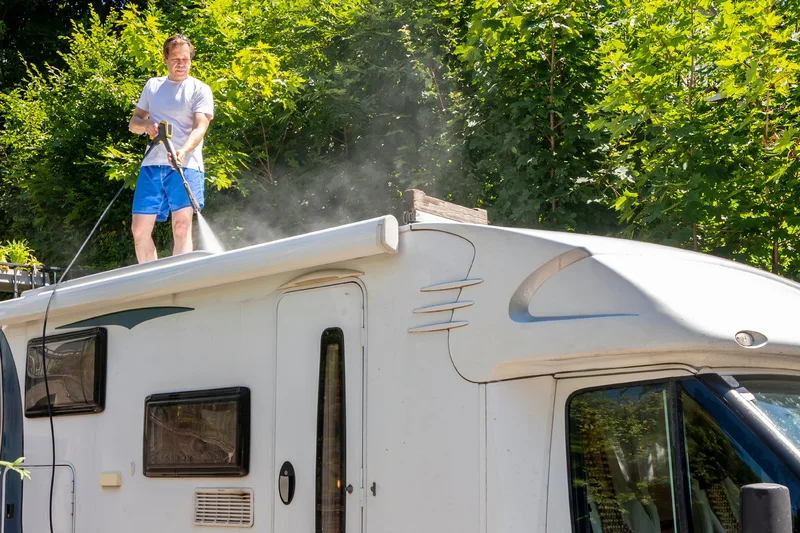
Weather is not the only reason a vehicle’s paint can look faded or dull. Wiping dust from the hood with a dry towel, a dirty sponge, or a dust wipe can drag abrasive particles across the clear coat and leave behind fine scratches.
Those tiny scratches scatter reflected light, reducing the clarity and shine of the finish and making the paint look dull even when the color itself has not faded significantly. Over the years, repeated washing or wiping with the wrong tools can add more surface damage and make the effects of sun exposure more noticeable.
How Can You Tell If Your Car’s Paint Is Starting to Fade?
Car paint fading in Longmont does not always happen in a way that is easy to notice at first. The change can be gradual, and you may only spot it when one panel starts looking different from another. Some signs to look for include:
- A hood, roof, or trunk that looks noticeably lighter than the doors or fenders
- Less gloss, especially when the vehicle is sitting in direct sunlight
- A dull, chalky, or hazy-looking surface
- Signs of oxidation, which can be more noticeable on certain colors and finishes
- Peeling or flaking clear coat when the damage has become more severe
Two cars with dull-looking paint may have very different problems. One could have surface contamination or mild oxidation, while another may have serious clear coat damage. The way the paint looks from the outside does not always show how much damage the finish has actually suffered.
How Can You Prevent Car Paint Fading in Longmont?
There’s no realistic way to eliminate UV exposure for a car that actually gets driven, but there’s a real difference between a vehicle that spends most of its life exposed and one that gets some basic protection.
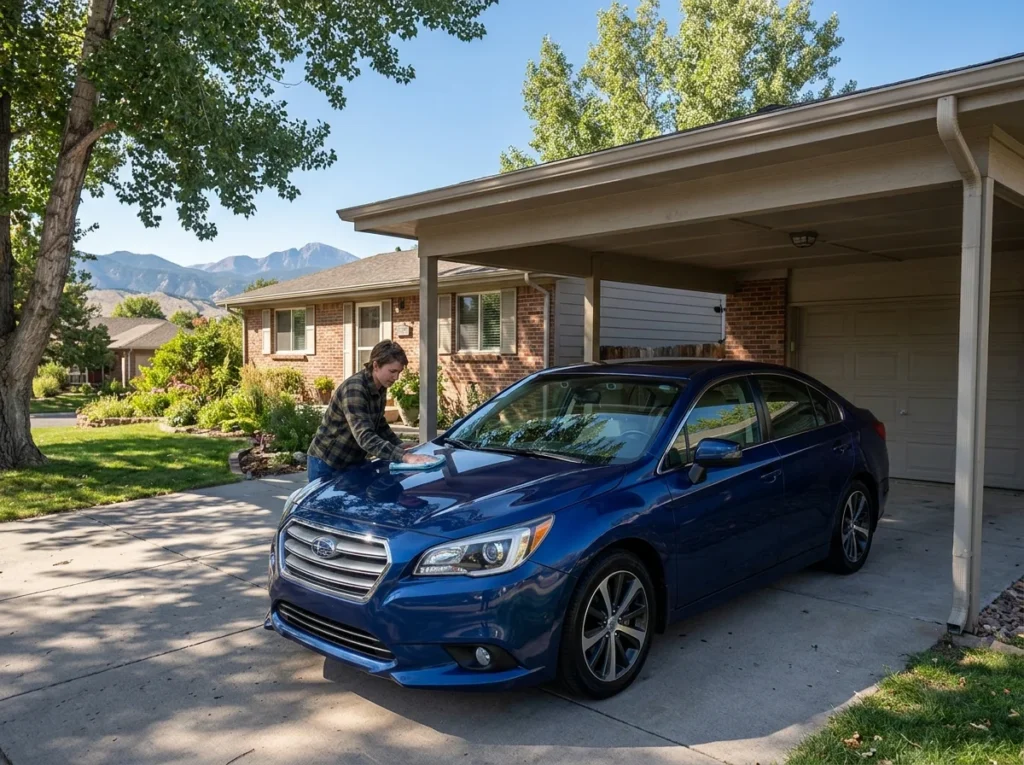
Limit Direct Sun Exposure
Garage parking makes the biggest difference simply because it removes hours of UV exposure every single day. When that’s not an option, even partial shade from a tree or a covered spot at work reduces the cumulative toll on a vehicle’s finish over the course of a year.
Wash Away Salt and Road Grime
Rinsing off deicing salt and heavy road residue after winter driving keeps those contaminants from sitting against the paint for extended periods. This is especially relevant during Longmont’s colder stretches, when treated roads are unavoidable for most daily drivers.
Use Proper Washing and Drying Methods
Sticking with automotive-specific soap, a clean wash mitt, and soft microfiber towels protects the clear coat far better than whatever happens to be sitting in the garage. For vehicles exposed to Colorado road grime and environmental contaminants, professional exterior detailing can provide a more thorough cleaning and surface-care routine. Skipping dry wiping and avoiding anything abrasive keeps the surface from accumulating the kind of fine scratching that dulls a finish long before UV damage would.
Maintain a Protective Finish
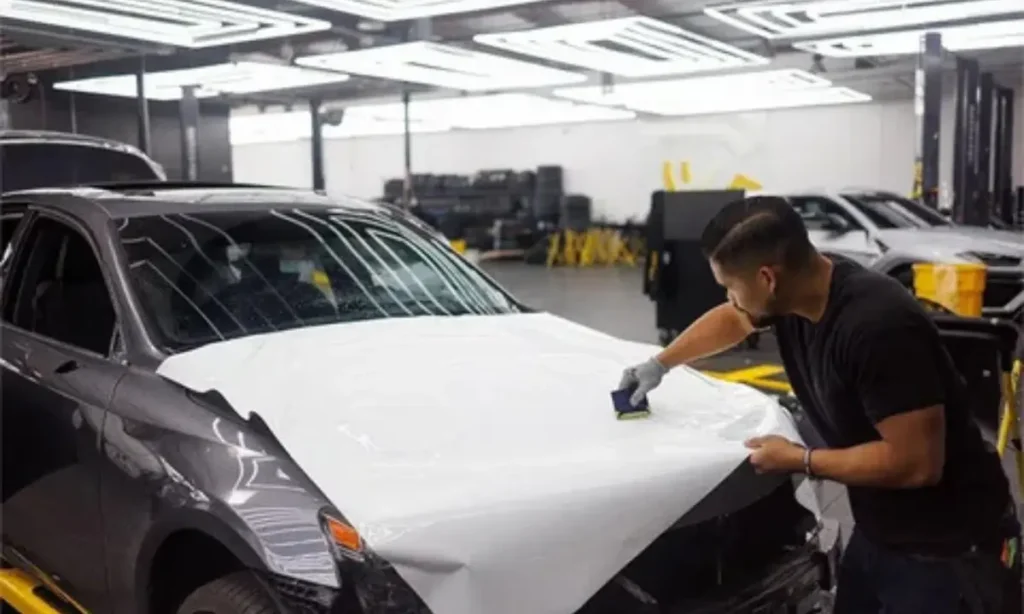
A layer of protective wax or ceramic coating gives the clear coat something to absorb the impact before it reaches the paint directly. Regular car waxing can also add a protective layer while helping maintain gloss between more extensive detailing services. None of these options stop aging entirely, but they buy time and reduce how much stress the finish takes on from sun and contaminants alike.
Does Wax or Ceramic Coating Help Protect Car Paint?
This question comes up constantly, and the honest answer depends on what you’re expecting each product to do.
| Protection Option | Main Purpose | What It Can Help With | Limitation |
| Wax | Adds gloss and a light protective layer | Everyday protection and easier upkeep | Doesn’t shield paint fully from UV or weather |
| Paint sealant | Provides a lasting barrier | Helps maintain the finish between details | Won’t fix damage that’s already occurred |
| Ceramic coating | Creates a durable, bonded protective layer | Helps a properly prepped finish resist contaminants | Can’t undo severe oxidation or failed clear coat |
None of these products work as well on paint that’s already compromised as they do on a clean, properly corrected surface. Ceramic coating in particular depends heavily on surface preparation. Applying it over paint with existing oxidation just locks a flawed finish underneath a protective layer instead of solving the underlying issue.
That’s why correcting the paint first tends to produce results that actually hold up for long-term paint protection.
What Should You Do If Your Car Paint Is Already Faded?
The right move here depends entirely on what condition the paint is actually in, not just how it looks from across the parking lot.
Check the Paint’s Actual Condition
Surface contamination and genuine clear coat deterioration can all produce a similarly dull look from a distance. Getting an actual assessment of the paint matters before spending money on a fix that may not address the real problem.
When Paint Correction or Restoration May Help
When the clear coat is still intact, and the paint is in suitable condition, correction work can improve light oxidation, surface dullness, minor swirls, and lost gloss. This process works by carefully leveling the compromised outer layer of clear coat to expose the healthier finish underneath.
When Polishing Is Not Enough
Once clear coat failure has set in, or if there’s visible peeling and significant paint loss, polishing alone won’t accomplish much. At that stage, the paint system itself has broken down, and a more involved repair approach is usually the only realistic option.
A Simple Paint Protection Routine for Colorado Drivers
Car paint protection Longmont vehicles need doesn’t require anything complicated, just consistency over time:
- Park under cover whenever it’s practical.
- Rinse off road salt and heavy grime regularly through winter.
- Clean off bird droppings and tree sap as soon as you spot them.
- Skip abrasive tools and dry wiping.
- Check the hood and roof periodically for early fading.
- Keep a protective wax, sealant, or coating maintained year-round.
FAQ
Does Colorado’s High Elevation Make Car Paint Fade Faster?
It can play a part. At higher elevations, there is less atmosphere above the vehicle to filter UV radiation before it reaches the paint. That adds to the UV exposure over time. Still, elevation is only one factor, so vehicles do not all fade at the same speed.
Does Washing Your Car Prevent Paint Fading?
Not by itself. Washing gets rid of road salt, dirt, and other stuff that can sit on the paint and affect the finish. It does not stop sunlight from reaching the paint, though. Regular washing works better when you also take steps to protect the car from the sun.
Does Waxing Protect Car Paint From the Sun?
Wax can give the paint some added protection from sunlight and can also help keep contaminants off the surface. The protection does not last forever, so it has to be reapplied from time to time. Wax can help reduce sun exposure, but it will not prevent all UV damage.
Can Faded Car Paint Be Restored?
Sometimes. If the paint mainly has light oxidation or has lost some of its shine, paint correction may bring back a better finish as long as the clear coat is still in good shape. If the clear coat is badly damaged or the paint has already been lost, polishing will not be enough.
How Can I Protect My Car’s Paint From Colorado Weather?
Covered parking is one simple step when it is available. Keep road salt and grime from sitting on the paint, and clean off things such as tree sap and bird droppings sooner rather than later. Wax or a paint coating can also add protection, but it needs to be kept up throughout the year.
Protect Your Paint Before Fading Gets Worse
UV exposure remains the main force behind paint aging, and Longmont’s elevation and sun exposure add real stress to a vehicle’s finish over the years. Consistent washing, reduced sun exposure, and a maintained protective layer all help slow that process down. Once fading has already set in, the right response depends on how far the oxidation or clear coat damage has actually progressed.
Paint that is still in solid condition can be treated with ceramic coatings from Izzy’s Auto Detailing LLC, providing a long-lasting protective layer that helps properly prepared paint resist sun exposure and road contaminants. Paint restoration can restore clarity to dull or oxidized paint where the underlying paint layers are still salvageable.
When you notice your car’s finish isn’t in the condition it once was, getting it assessed is the best method to determine precisely what it does need. Professional car detailing in Longmont can help determine whether the vehicle needs routine exterior care, decontamination, polishing, or more extensive paint restoration.