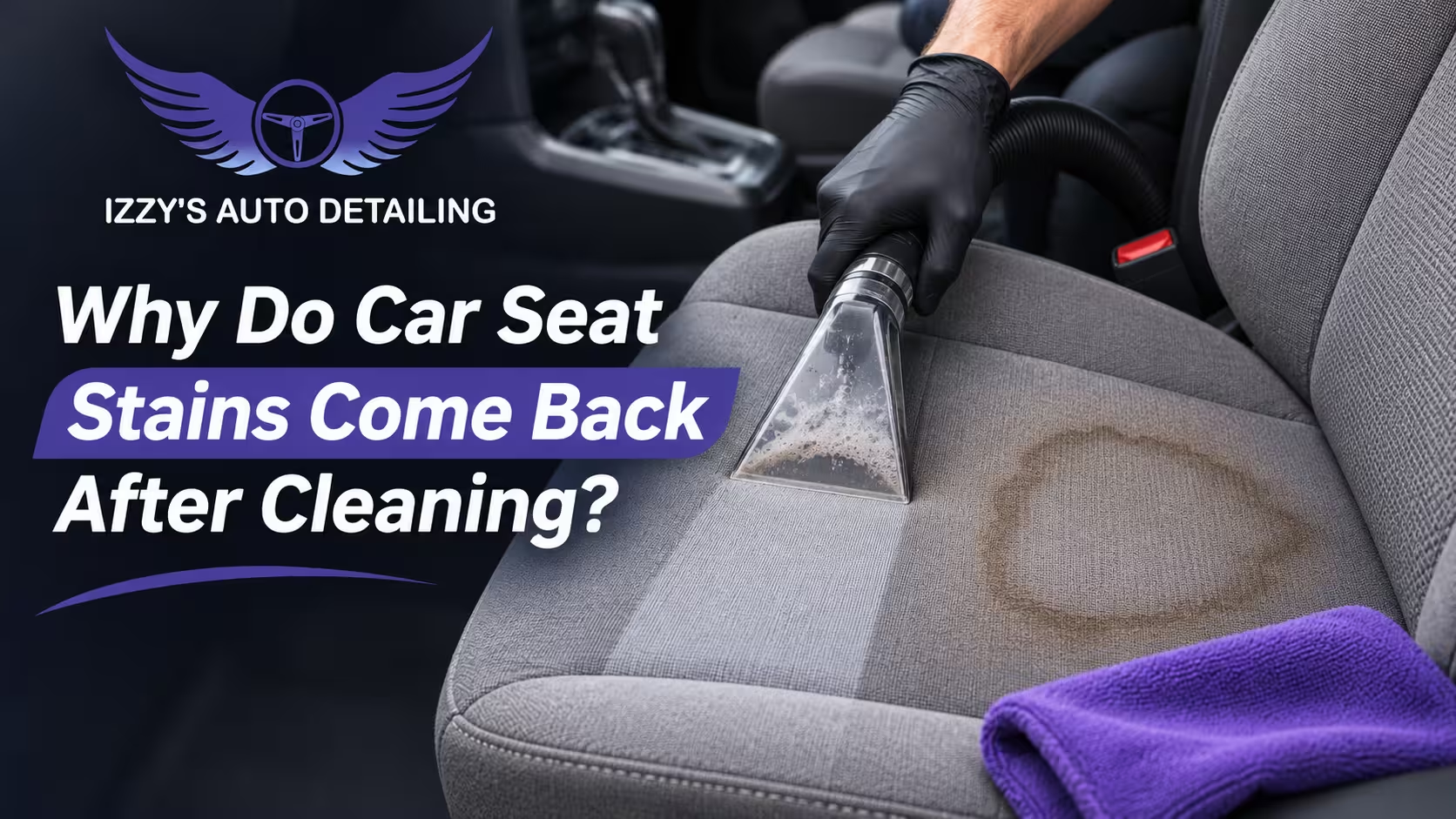
You scrub a coffee spot out of the passenger seat, and the fabric looks great while it’s still damp. By the next morning, a brown ring sits right where the stain used to be. Car seat stains reappear like this all the time because the real problem often sits below the surface you cleaned. Stain wicking, leftover cleaner, moisture in the padding, and incomplete drying can each bring a mark back. Some marks aren’t dirt at all, but permanent color change, and knowing the difference tells you whether cleaning again will help.
Why Do Car Seat Stains Reappear After Cleaning?
Cleaning the part you can see doesn’t always remove what caused the stain. A spill soaks into the fabric and the layers beneath it, leaving material that a surface wipe never touches.
Stain Wicking Brings Hidden Dirt Back to the Surface
Stain wicking is moisture pulling leftover dirt up through the fabric as the seat dries. The exposed face dries first, so water deeper in the cushion keeps moving upward to replace what evaporates. Dissolved coffee or grime rides along and stays on the top fibers once the water is gone. That’s why a seat can look spotless while wet and show a dark ring hours later.
The Original Spill May Extend Deeper Than the Visible Stain
Drinks, food, and grease rarely stay on top of the fabric. Soda can run through the weave and spread sideways underneath, while grease clings to fibers and resists plain water. The amount spilled and the seat’s construction decide how deep it goes, so a small drip may stay near the surface while a full cup can reach the padding. Surface cleaning handles the first case and often misses the second.
Can Too Much Moisture Cause Stains to Return on Car Seats?
Yes, and it’s one of the most common reasons. Most seats stack fabric over foam padding, and the more water you push into that stack, the farther dirt travels, and the longer drying takes.
Water Can Carry Contamination Into or Out of Seat Foam
Heavy spraying or soaking drives water through the fabric into the foam padding, sometimes carrying loosened soil deeper than the original spill went. The flow reverses during drying, and moisture in the foam rises back toward the surface with whatever it holds. Seat foam contamination is hard to fix because padding traps liquid and resists rinsing. Plenty of stains never get that far, and results depend on the spill, the moisture level, and the seat’s construction.
Improper Drying Can Leave New Marks Behind
Slow, uneven drying creates its own trouble. A soaked seat in a closed car stays damp longer, giving wicking more time to work and leaving tide lines where wet and dry fabric meet. Leaving excess upholstery moisture behind is poor practice even when the stain itself came out, so judge the result only after the fabric is fully dry.
Can Cleaning Product Residue Make Car Seat Stains Come Back?
It can, and more product rarely means a cleaner seat. Upholstery cleaning solutions loosen dirt so you can lift it out, but anything left behind keeps sitting in the fibers after the job looks finished.
Excess Cleaner Can Remain in Upholstery Fibers
Pour on too much cleaner, and some of it stays in the fibers after you wipe. That fabric residue can leave a sticky or stiff patch that grabs dirt from clothes and hands, one common reason for upholstery stains coming back darker. Diluting the product as the label directs and removing it thoroughly afterward helps prevent this.
Incomplete Extraction Can Leave Dirt Behind
Loosening a stain and removing it are separate steps. Scrubbing breaks dirt free, but that dirt stays in the seat until upholstery extraction draws the soil and solution back out with suction. Hot water extraction is one common method, yet not every automotive seat fabric tolerates heat or heavy moisture. The method has to fit the material, and no method guarantees every stain comes out.
How Can You Identify Why a Car Seat Stain Has Returned?
Look at when the mark came back and what it looks like now. Those details offer useful clues, but they can’t confirm the cause on their own, so treat this table as a starting point.
| What you notice | Possible explanation |
| A stain returns after the seat dries. | Moisture-related stain wicking |
| A sticky or slightly stiff patch remains. | Possible cleaning-product residue |
| A dark mark appears larger after cleaning. | Remaining contamination or moisture migration |
| A stain returns in the same location. | Original contamination may remain deeper in the upholstery |
| A lighter or faded patch remains. | Possible color loss or material damage |
Think back to the original spill and how you cleaned it. A sugary drink and a greasy snack behave differently in fabric, and how much product and water you used matters just as much. That history narrows the list quickly when car stains return after cleaning. Check the fabric too, because fading or a rough texture points to damage rather than dirt. Some seats still need a hands-on inspection to know for sure.
Can Every Returning Car Seat Stain Be Removed?
Not always, because some returning marks are leftover dirt or residue you can still lift out, while others are permanent changes to the fabric. Telling them apart keeps you from scrubbing at something that won’t budge.
When Another Cleaning May Improve the Stain
Remaining dirt, removable residue, and wicked-up contamination often respond to a second, more careful attempt with controlled moisture and proper extraction. The fabric type and the original spill shape how much improvement is possible. Work out the likely cause before you grab the spray bottle again, because repeating the same method usually repeats the same result.
When Discoloration May Be Permanent
Fading, dye changes, chemical damage, and worn fibers leave marks that cleaning can’t undo. Car seat stain removal takes away dirt, but it can’t restore lost color or repair damaged material. Repeated scrubbing or soaking with harsh chemicals usually makes these areas look worse. Sometimes the realistic goal is a lighter mark rather than one that’s completely gone.
How Can You Prevent Car Seat Stains From Reappearing?
Preventing recurring car seat stains takes four habits working together. Each one blocks a different route the stain could use to climb back to the surface.
Use the Right Cleaning Method for the Seat Material
Fabric, leather, and vinyl each need different care, and a product made for one can harm another. Confirm on the label that a cleaner suits fabric upholstery, and check your owner’s manual for interior care guidance. Testing on a hidden spot first can reveal color bleeding before it shows up mid-seat.
Avoid Excessive Water and Cleaning Products
Use only as much liquid as the job needs. Extra water drives dirt deeper, and extra cleaner leaves residue, so heavy application often creates the problem you’re trying to fix. Blot or extract whatever you loosen, and stop after a careful attempt or two rather than attacking the spot harder.
Allow the Upholstery to Dry Completely
Open the doors or run the car’s fan so air moves across the drying seats. Good airflow shortens drying time and gives leftover moisture less chance to carry dirt upward. Wait until the cushion feels dry below the surface before you judge the result.
When Should You Consider Professional Car Seat Cleaning?
Stop the home attempts when the same mark keeps returning after the seat dries, since that pattern often means the problem sits deeper than household methods reach. Outside help also makes sense when a spill may have soaked into the padding or cleaners have left sticky, uneven patches. Faded fabric, changed texture, and doubt about which method is safe are all car fabric stain problems worth handing off. A professional interior detailing assessment can separate removable contamination from permanent discoloration and choose an approach that suits the material.
Frequently Asked Questions
Why do car seat stains reappear after the seats dry?
Stain wicking is usually the reason a mark appears only after drying. Moisture in the seat rises as it evaporates and carries dissolved dirt up from deeper layers, then leaves that dirt on the top fibers.
Can stains inside car seat foam come back after cleaning?
Yes, they can. If a spill soaks into the foam padding, cleaning only the fabric may leave contamination underneath that rises the next time the seat gets wet. Whether that happens depends on the spill size and the seat’s construction.
Should I clean a car seat again if the same stain returns?
Not until you know why it came back. Another round won’t solve leftover residue, deep contamination, or faded color, and each attempt adds moisture and wear to the fabric. Identify the likely cause first, then pick a method that addresses it.
Final Thoughts
Car seat stains come back because of wicking, deep contamination, leftover cleaner or moisture that never fully dried, and some marks are permanent damage rather than dirt. Pin down the cause before cleaning again, since the right method and careful moisture control matter as much as residue removal and complete drying.
If a stain keeps returning, Izzy’s Auto Detailing LLC provides car interior detailing in Longmont, Colorado, and throughout Northern Colorado. Owner Izzy founded the business in 2017 and brings more than 15 years of detailing experience. Reach out to have your seats assessed and talk through a realistic next step.