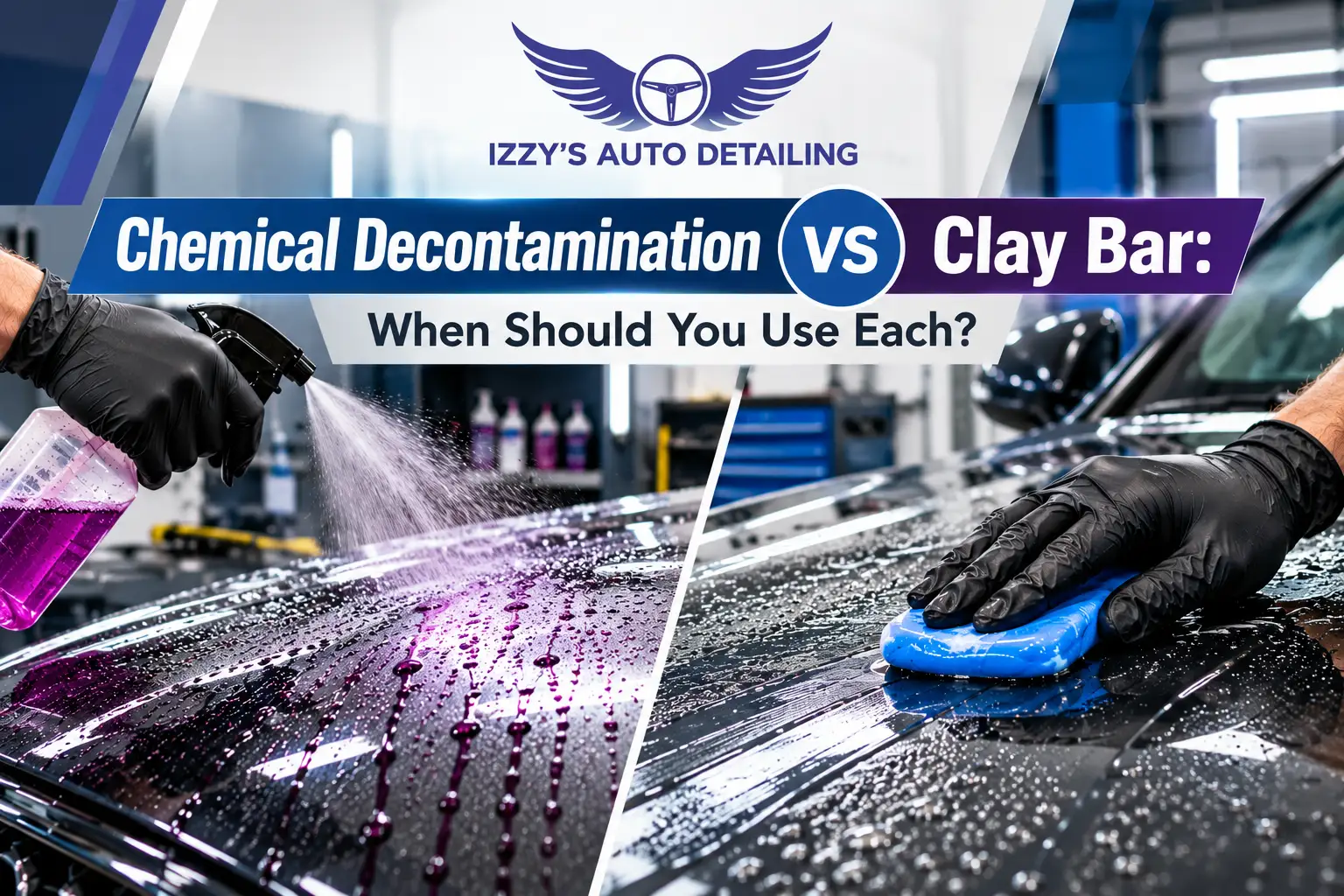
Chemical decontamination vs clay bar comes down to one question: what is actually stuck to your paint? Can you name it? Iron fallout or tar usually calls for a matching chemical first. Those products react with specific substances. A clay bar works another way. It physically lifts suitable bonded particles off the surface.
Neither method wins every time. Reaching for the wrong one wastes effort. Orange specks call for different help than paint that feels rough with nothing visible on it. Three things drive the choice. Know the contamination type. Check what stays bonded after a wash. Judge the condition of the paint underneath.
How Chemical Decontamination and Clay Treatment Differ
Think chemistry versus friction. One method treats the paint without rubbing it. The other needs contact and a light touch. Chemicals work by reacting. Clay works by gripping and lifting. Each has a place on the paint. Each has limits too. Knowing both sets of limits saves you time and keeps the paint safe.
What Chemical Paint Decontamination Does
Chemical products go after specific contaminants. That’s the whole idea. An iron remover reacts with suitable iron-containing particles. Think brake dust or industrial fallout that has embedded in the paint. A tar remover is built to soften sticky road residue. Different jobs call for different formulas.
No single product handles everything. An iron remover won’t dissolve tar. A tar remover does nothing for iron. Formulas vary between brands. The label decides what a product is meant for and which surfaces it suits. Read it before you spray anything on the panel. Skipping that step invites trouble.
The upside is low friction. A chemical can deal with a specific problem before anything touches the paint with real pressure. The limit is just as clear. If what’s left isn’t chemically reactive, the product has nothing to work on. Rinsing leaves the same rough patch behind.
How a Clay Bar Removes Bonded Particles
A detailing clay bar works by contact. Glide it across a lubricated panel, and it picks up suitable bonded particles that washing left behind. That is the reason paint can feel dirty even when it looks clean. Soap removes loose dirt. It doesn’t always release what has bonded.
Lubrication isn’t optional. Clay lubricant lets the bar slide instead of dragging across the paint. Heavy pressure can leave fine marring behind. So can too little lubricant. So can a bar loaded with grit. Extra passes over spots that already feel smooth don’t help the paint either.
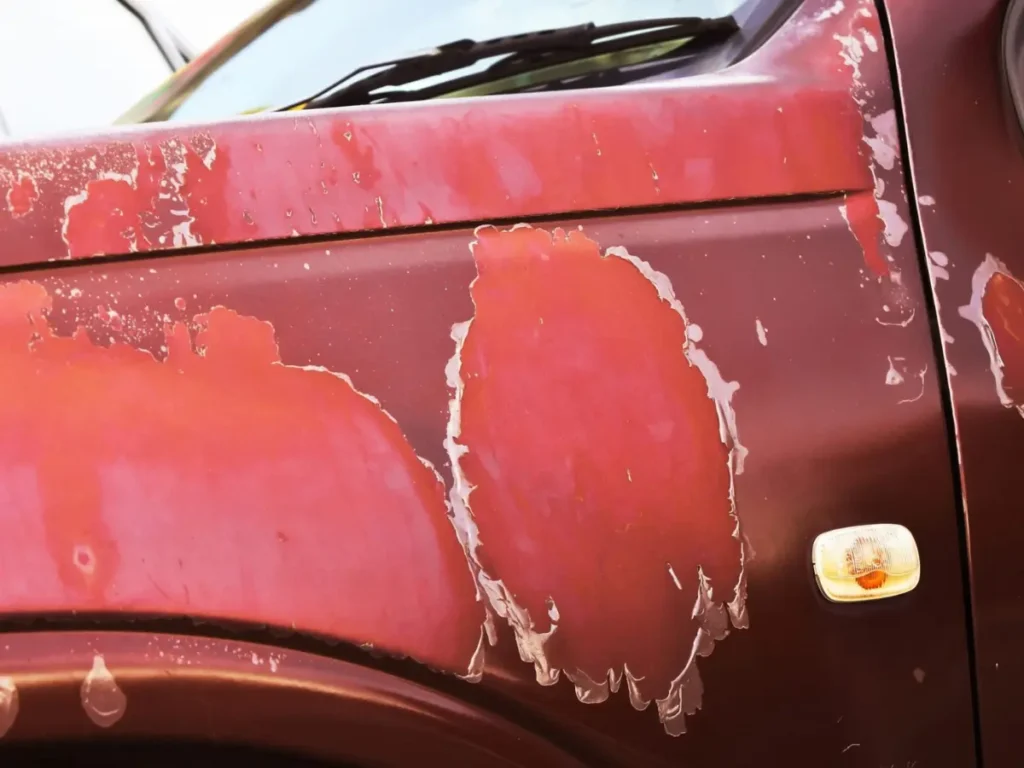
Clay has hard limits too. It won’t restore scratches or swirl marks. It won’t cure etching or damaged clear coat either. If paint feels rough because of damage instead of contamination, clay can’t smooth it out. Think of automotive clay treatment as cleaning. Never think of it as repair.
Which Contaminants Respond to Each Method?
Use this table to get the idea, not to follow this page exactly as a starting map, not a verdict. Each row pairs a problem with the first thing worth trying. Real paint rarely fits one row perfectly. Check the surface itself before you commit to any product. Then read the label closely and match it to your paint.
| Contamination or surface issue | Preferred starting point | Reason |
| Iron fallout and suitable iron-containing deposits | Compatible iron remover | Targets iron-containing contamination |
| Tar spots and sticky road residue | Suitable tar remover | Designed for certain tar and road-residue deposits |
| Remaining bonded particles after washing and suitable chemical treatment | Clay, if needed | Mechanically removes suitable remaining contaminants |
| Several types of contamination | Assess the surface and select targeted treatments | Different contaminants may need different approaches |
| Loose dirt and ordinary surface grime | Vehicle wash | Loose contamination should be removed before paint decontamination is assessed |
Looks can mislead. Rust-colored specks often suggest iron. Small dark dots might be tar or sap. Don’t judge by color alone. Formulas differ too. Not every remover suits every surface or coating. Treat the table as a decision-making aid. Then confirm against the actual paint and the product label.
When to Choose Chemical Treatment Over a Clay Bar
Suspect iron? Start with the iron remover. Tiny rust-colored specks are a common clue, especially on light paint. Chemical decontamination in car detailing makes sense here because the product targets the problem directly and skips the friction. It also suits paint that’s soft or already marred. You’d rather avoid rubbing until it’s proven necessary.
Tar is a separate problem. Use a compatible tar remover instead of an iron remover. Look that it suits your finish first. Chemicals don’t replace clay everywhere, though. If bonded particles aren’t chemically reactive, the paint will keep feeling rough after you rinse the product off.
Follow the label on dwell time and surface compatibility. Rinse as directed. Many labels warn against letting a product dry on the paint. Formulas have different rules, so skip guesses. Different brands also give different timing. What worked for one product may not suit the next one you pick up.
When a Clay Bar Is the Better Option
Choose clay when the paint still feels rough after a proper wash and any chemical treatment that made sense. When to use a clay bar is usually not a calendar question. It’s a question of what the surface is still telling you. Remaining bonded particles are the classic target.
Not every panel needs it. Hoods and roofs often pick up more than doors do. One panel can feel smooth while another doesn’t. Check each one after washing. Treat only the panels that still feel rough. More passes aren’t better, and extra clay on a clean panel only adds friction.
Light pressure and plenty of lubricant decide whether clay helps or hurts. Soft paint and existing defects also affect the call. So does protection like wax or a sealant. Clay may reduce some of it. Roughness doesn’t prove clay is the answer, either. Etching and oxidation can feel rough. So can failing clear coat. Clay won’t repair any of them. Those need a different assessment.
How to Decide Whether Your Car Needs One Method or Both
Start With the Contamination, Not the Product
Ask what’s likely on the paint before choosing what goes on it. Where you drive tells you plenty. Start with that. Highway miles and brake dust can leave iron behind. So can nearby rail or industrial sites. Fresh asphalt and hot weather make tar more likely.
Next, look at the paint under a proper paint inspection light. A quick glance won’t tell you enough. Specks are clues, not proof. Notice whether roughness survives an ordinary wash. Scratches matter here. So does thin clear coat. Think about any wax or coating you’d rather not disturb.
Use Both Methods Only When the Surface Calls for Them
Plenty of cars need both methods. Plenty don’t. One vehicle can carry iron specks. Tar spots too. Bonded debris that isn’t reactive can sit there at the same time. No single product covers all three. Targeted chemicals clear what they’re built for. Clay earns a spot only if the surface still feels contaminated afterward.
Doing both on every car by habit just adds work. Skip any stage the paint doesn’t ask for. Each extra stage costs time, and clay adds friction the paint may not need. Repeating a treatment on a surface that’s already clean carries risk and no benefit.
Once you know the contamination and the right treatment, the full car paint decontamination process shows how the stages fit together. Each stage builds on the one before it. Walk through it once from the first wash to the last step. Seeing the whole order keeps you from guessing.
| Quick decision guideSuspected iron fallout? Start with a compatible iron remover. Sticky tar spots? Use a suitable tar remover. Paint still feels contaminated after washing and appropriate chemical treatment? Consider a lubricated clay treatment. Do it only if the leftover contamination and the paint’s condition call for it. |
Frequently Asked Questions
Is a Clay Bar Better Than an Iron Remover?
Neither is better across the board. An iron remover targets suitable iron-containing contamination. Clay mechanically lifts certain bonded particles that remain on the paint. Think of them as different tools. Any clay bar vs. iron remover ranking falls apart once the contamination differs. The right choice follows what’s on the surface.
Can You Use a Clay Bar Without Chemical Decontamination?
Yes, in some cases. If the paint is rough but shows no sign of iron or tar, clay may be a reasonable first move. When iron fallout or tar is suspected, a suitable targeted chemical product is often the better starting point. Chemical treatment doesn’t have to come before every clay session.
Should You Use a Clay Bar Before Paint Correction or Ceramic Coating?
Decontamination often forms part of paint preparation, but clay isn’t automatically required. The need depends on the paint’s condition and the result you want. Contamination left on the surface can get in the way of polishing or coating. Assess the paint first. Treat only what it needs.
Choosing the Right Paint Decontamination Service
Chemical treatment and clay solve different problems. The right pick depends on what’s on the paint and how the paint is holding up. Izzy’s Auto Detailing LLC provides professional automotive detailing services in Longmont, Colorado, serving vehicle owners across Northern Colorado and the surrounding areas. If you’re unsure which treatment your paint needs, call 720-266-1760 to schedule an assessment.