You open the windows and attach a new air freshener to the vent. By morning, the car still smells like an ashtray. That stubborn cigarette smoke smell in car interiors has a physical source. A sticky film is left behind when smoke evaporates. It is retained by fabric, foam, and vents. This guide identifies the sources of the odor and the proper way to clean each material.
Why Cigarette Smoke Odor Remains Inside a Car
Quitting smoking in the car doesn’t end the smell. The particles and sticky compounds left behind keep giving off odor for months. Knowing where they settle helps you clean the right places first. Three areas hold most of it. Each one needs its own approach.
Smoke Residue Settles on Interior Surfaces
Each cigarette leaves a thin layer of tobacco residue behind. It lands on the dashboard. It coats the windows and steering wheel. Over time, that nicotine buildup turns into a tacky yellow or brown film. The film traps odor and grabs dust. A quick wipe won’t fix it.
Porous Materials Absorb Smoke Odor
Seats and carpet suck up the scent of the person sitting on them. So do foam cushions and the headliner. Smoke is trapped between fibers and absorbed into the underpad. A damp cloth can’t reach that deep. This is the explanation for a common enigma. A nice-looking vehicle can have a bad smell.
The Ventilation System Can Circulate Lingering Odors
Your car’s HVAC system draws air through the ducts and cabin air filter. If someone smoked with the fan running, the filter caught smoke particles. Residue can coat the ductwork too. Later, you switch on the fan or the AC. That stale smell blows right back out.
Prepare the Interior Before Cleaning
Clear the car out before you open any cleaner. Spraying over loose ash will only create a smelly paste. Begin with the garbage and other loose items. Next, vacuum as much as possible in the corners. The end of the inspection will reveal where the residue is heaviest.
Remove Ash, Cigarette Butts, and Other Debris
Empty the ashtray first. Then dig through the cupholders and door pockets. Look in the console as well. Cigarette butts like to hide in places you might miss. Place trash in a bag and remove it from the vehicle. Remove seat covers and organizers to clean separately.
Vacuum Hidden and Hard-to-Reach Areas
Remove the floor coverings and place them aside. Use a crevice tool to run between seat seams and between the cushions. Then, push each seat completely forward. Vacuum the carpet underneath. Then, slide the seat back to clean the front footwell. Did smoke reach the trunk? Vacuum it too.
Identify Areas With Visible Smoke Residue
Grab a white microfiber cloth and wipe a few areas to check for residue. Check the cloth after each pass. If it is yellow or sticky, there is still residue present. The darker the smudge, the more work the area requires. The trouble spots to begin with are:
- Inside the windshield and side windows
- Headliner above the driver’s seat
- Steering wheel, shifter, and door handles
- Seat belts, sun visors, and vent slats
Clean Smoke-Affected Materials Throughout the Cabin
Match the method to the material. A cleaner that’s safe on plastic can stain cloth. It can dry out leather. It can even loosen the glue behind the headliner. So test every product on a hidden spot first. Check the result before you move on.
Remove Smoke Smell From Car Seats and Upholstery
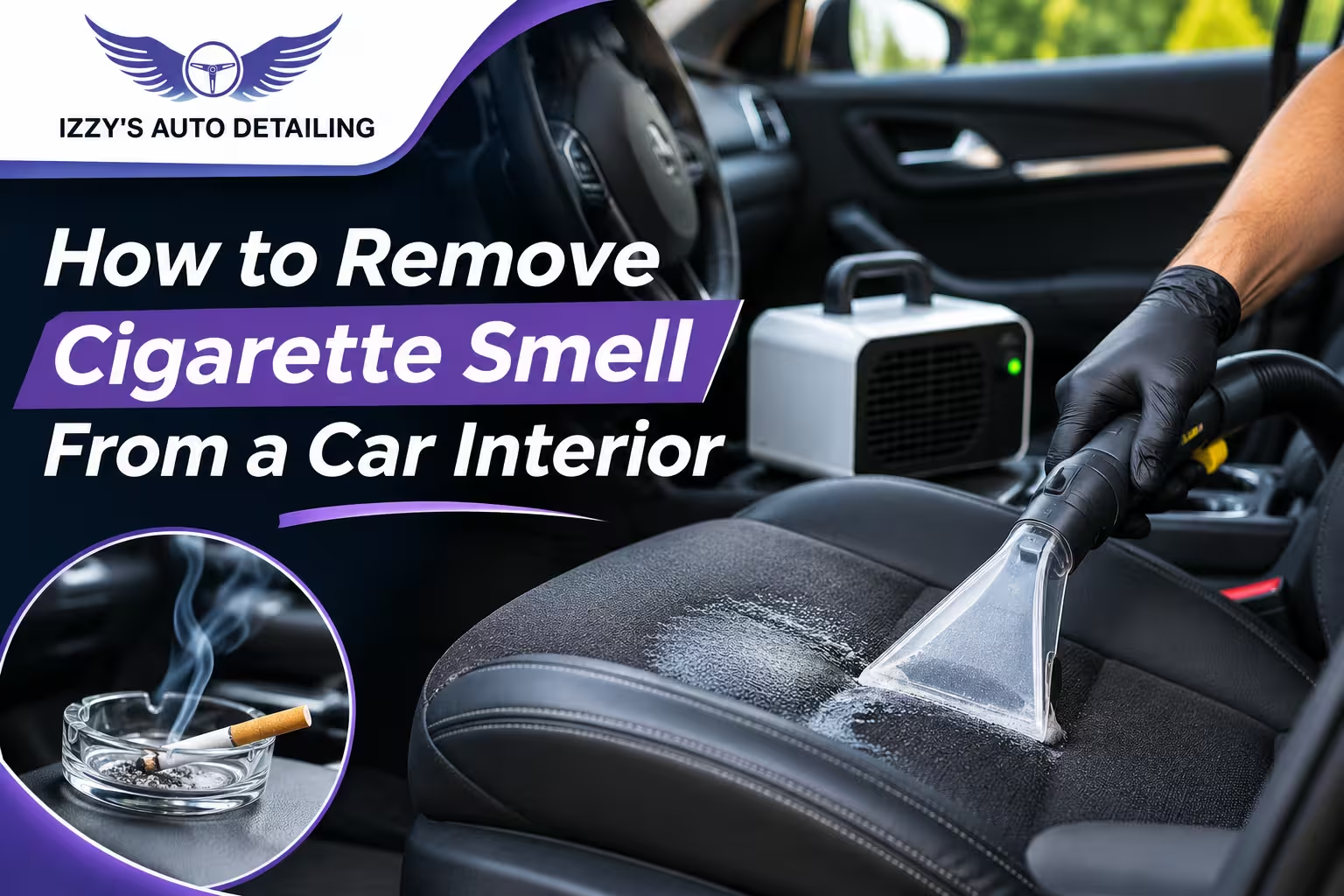
For cloth seats, use a car upholstery cleaner. Use sparingly and gently massage into the fabric. A second machine called an upholstery extractor rinses the materials and sucks up the dirty water. Lifts more residue than a towel. Leather is different. Clean with pH-balanced leather cleaner and a damp microfiber cloth. Finish with a leather conditioner to prevent the material from drying out or cracking. Don’t place extractors on leather.
Clean Carpets and Floor Mats
With every step you take, shoes leave tobacco ash and residue deeper in the carpet. Vacuum and then use a stiff brush and automotive carpet cleaner to scrub. Remove it by using a wet vacuum. Wait until everything is dry before the mats are inserted back. Mildew can be caused by trapped moisture.
Clean the Car’s Headliner Without Damaging It
Smoke tends to settle near the roof, making the headliner a common place for lingering odors. However, it’s also a delicate part of the interior. Excess moisture can loosen the adhesive holding it in place and cause the fabric to sag. Apply a little upholstery cleaner to a microfiber cloth and gently blot the surface. Avoid soaking or scrubbing it.
Wipe Down Dashboards, Doors, Glass, and Seat Belts
Hands touch the dash and door panels all day. Clean them with a plastic and vinyl cleaner. Treat the steering wheel and switches the same way. Save the glass for last so drips don’t streak it. Pull each seat belt fully out and wipe it. Let it dry before it retracts.
Address Cigarette Odor Inside the HVAC System
Say the cabin is spotless now. Yet the moment the fan kicks on, you smell smoke again. That usually means residue is sitting in the ventilation system. Start with the simplest part, which is the cabin air filter. Then decide if the ducts need more.
Check and Replace the Cabin Air Filter
The cabin air filters of a smoker’s car usually appear grey and have a stale smell. Check the owner’s manual for filter type and where it’s located. Cabin air filters are located behind the glove box in many vehicles. Install after cleaning to prevent the dust from blocking it. Only the old filter’s smell will be absorbed by a fresh filter.
Know When Vent and HVAC Cleaning Is Needed
Brush off and wipe with a damp cloth any dust and residue left on vent slats. If the smell is not gone after changing the filter and cleaning inside the unit, the problem might be within the HVAC system. It can be dusting the duct, or the evaporator space. An automotive service facility can check the system and determine an appropriate system cleaning procedure. This is most needed in the cars of heavy smokers.
Why Air Fresheners May Not Remove Tobacco Odor
Covering an odor and removing it are two different jobs. Air fresheners only do the first. Hanging trees and vent clips layer perfume over the smell. They never touch the residue. Once the fragrance fades, the tobacco smell in the car comes right back. Odor absorbers and smoke odor neutralization products work best after cleaning. No spray reaches the odor buried in foam.
| Cleaning Safety ReminderNever mix cleaning products. Some combinations, like bleach and an ammonia-based glass cleaner, release toxic fumes. Stick with products made for car interiors. Some household cleaners can fade fabric or dull plastic. Keep the doors open so fresh air moves through the cabin. |
When Professional Cigarette Odor Removal Is Worth Considering
Years of daily smoking can leave more residue than a weekend of DIY cleaning will reach in a few hours. You might scrub every surface and still catch that smell on a hot afternoon. If the odor keeps coming back, a detailer may be worth calling.
Deep Cleaning and Upholstery Extraction
A commercial upholstery extractor flushes fabric and carpet. Then it pulls the solution back out with far more suction than most home machines. That lifts residue from deep in the fibers. An experienced detailer also knows which surfaces need a gentler method. Delicate trim stays safe.
Persistent Odors and Hidden Contamination
Some smoke contamination hides where you can’t see it. It sits in seat foam or under the carpet. It can also cling to ventilation parts behind the dash. If a smell survives a full cleaning, one of those areas is likely to be to blame. Some cars need a new carpet pad or headliner.
Choosing the Right Odor Treatment
Any car smoke odor treatment should fit where the odor lives. Ozone generators and chemical foggers come up often. Neither guarantees results or replaces cleaning. Ozone is harmful to breathe. It can also wear down rubber and some plastics. Only a trained professional should use it in an empty car that gets aired out.
How to Prevent Cigarette Smoke Odor From Returning
New smoke undoes all that work fast. Once the cabin is clean, a few simple habits keep it that way. None of them take much time. They just need to happen often enough that residue never gets a chance to build up again. Here’s what helps:
- Keep smoking out of the car, even with the windows down.
- Clear out stray ash or butts the same day.
- Vacuum seats, carpets, and mats regularly.
- Replace the cabin air filter on schedule.
- Clean at the first hint of odor, not with a spray.
FAQs
Can cigarette smoke smell be completely removed from a car?
Often it can, but not always. Results depend on how long and how heavily someone smoked. They also depend on which materials soaked up the smoke. Did the cleaning reach foam and ductwork? That matters too. Years of heavy smoking may leave a faint odor behind.
How long does it take to remove cigarette odor from a car?
No fixed timeline fits every car. Light contamination may need one thorough cleaning. A heavily smoked-in car can take several rounds. Drying adds time as well. Fabric and carpet must dry completely before you can judge the smell. Wait a day or two before you decide.
Will replacing the cabin air filter remove the cigarette smoke smell?
It helps only with odor coming from the old filter. A new filter can’t pull residue out of the seats or carpet. It won’t touch the headliner or hard surfaces either. The rest of the cabin still needs a full cleaning. The swap is one step.
Final Thoughts
Cigarette odor rarely lives in one spot. It clings to hard surfaces, soaks into fabric, and travels through the vents. A lasting fix has to reach every layer. If you’d rather hand off a stubborn case to the professionals, Izzy’s Auto Detailing LLC is here to help. Based in Longmont, Colorado, our interior detailing services include deep odor elimination and complete upholstery shampooing. Explore our detailing services or call 720-266-1760.