Sunlight slowly wears out the clear coat on most cars that live outside, and Colorado drivers get more of it than they think. Ultraviolet radiation breaks down the resin that gives paint its shine, and after enough seasons, you get dull color, oxidation, and eventually cracking or peeling. For drivers in Longmont, CO, UV damage to clear coat tends to sneak up on them because it starts so quietly. Most people only notice once the finish already looks tired.
How UV Rays Break Down Automotive Clear Coat
Your car’s color sits under a clear coat, a transparent layer of resin that gives automotive paint its depth and shields the pigment below. Ultraviolet radiation from sunlight is one of the things that the layer has to handle every single day.
Manufacturers build UV absorbers and stabilizers into the clear coat to soak up much of that energy. They do a solid job at first, but they wear down over time. Meanwhile, UV rays keep triggering chemical reactions in the resin itself, slowly breaking the bonds that hold it together. Heat speeds that along.
So the clear coat doesn’t burn off. It gets brittle, rougher at a microscopic level, and less able to protect the color underneath. That’s the core of automotive clear coat damage: quiet paint degradation that builds until the surface can’t keep up.
How Clear Coat Damage Progresses Over Time
Gloss fades first, then the surface turns hazy, oxidation sets in, and only later does the coating crack and peel. Each stage can last a long time, and cars move through them at different speeds.
Early Changes in Paint Gloss
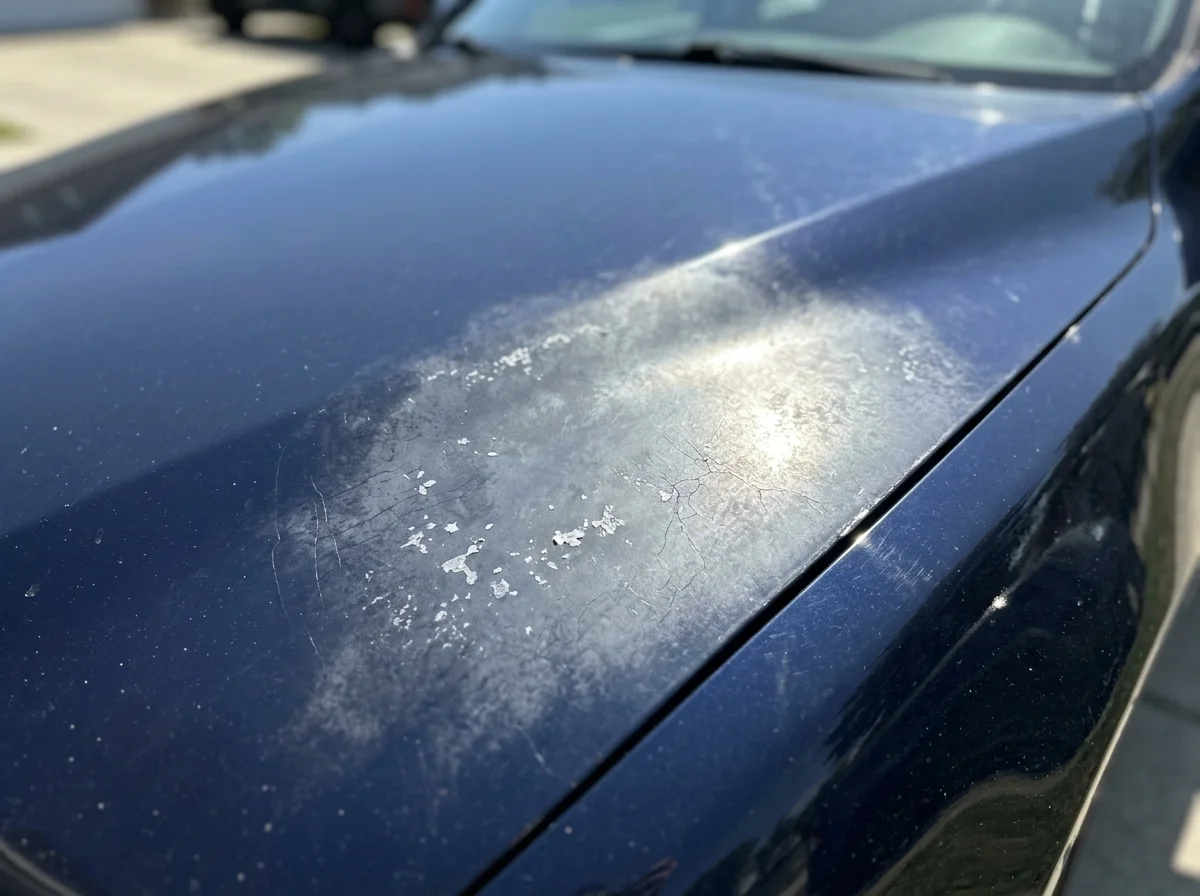
Reflections get softer. A streetlight that once looked crisp in the hood now looks smeared, and the color seems muted even after a wash. That’s clear coat deterioration in its early form, often showing up as a dull paint finish on the sunniest panels. Fading paint can follow.
Dullness alone doesn’t prove UV is the culprit, though. Age, past repairs, and worn-out protection can look much the same.
Advanced Clear Coat Failure
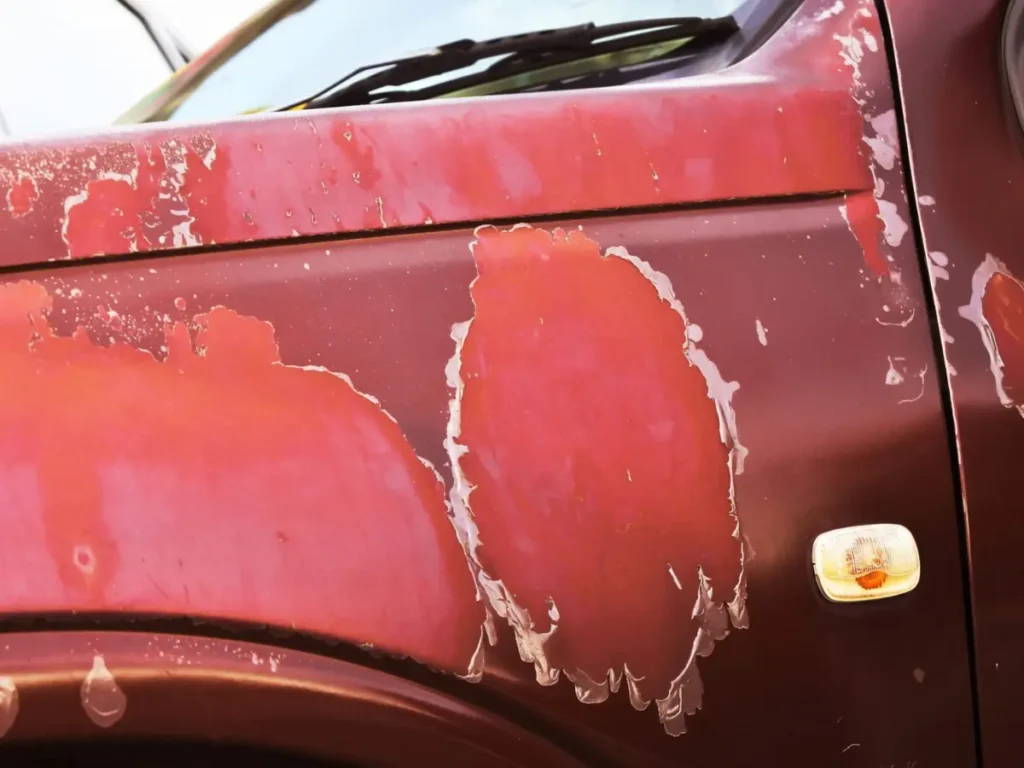
Once surface oxidation runs deep, the clear coat turns rough and starts to crack. Water works its way into the cracks, and the clear coat slowly starts to separate from the basecoat. Flaking comes next, then peeling the clear coat in patches, with chalky color exposed underneath. That’s actual clear coat failure, not just wear.
How Can You Tell If UV Has Damaged Your Clear Coat?
Start with gloss. If the paint has lost its depth and a wash doesn’t bring it back, that’s the earliest and most common sign. Other things to watch for:
- A hazy or dull finish
- Uneven fading between panels
- A chalky, oxidized look
- Fine cracks
- Lifting or peeling clear coat
- Worse wear on the most exposed panels
Roofs, hoods, and trunk lids face the sky all day, so they usually show it first. Doors get less direct light and often hold up longer.
| Good to Know: Early Damage Does Not Always Look DramaticUV deterioration usually begins as a slow drop in gloss or clarity. Peeling is an advanced sign, not the first stage, so a car can be well along before anything looks obviously wrong. |
How UV Damage Car Paint Longmont Can Develop Under Colorado Sun
Elevation is the starting point. The higher you go, the less atmosphere sits overhead to absorb UV rays, so more high-altitude UV reaches the ground. Longmont sits at nearly 5,000 feet in elevation, and Colorado has plenty of bright, clear days on top of that.
Exposure still depends on the car. A vehicle parked outside at work all day takes far more sunlight than one that’s garaged. Summer brings the longest hours, and the most heat, and winter snow can bounce some light back onto lower panels.
None of that guarantees failure, but paint longevity tends to suffer on a car left in the open with no protection.
Why Some Vehicles Show UV Damage Faster
Two cars in the same neighborhood can age very differently. Parking is usually the biggest reason, since a garaged car sees a fraction of the direct sun a street-parked one does.
Age matters too. The older clear coat has had more time to use up its UV protection. Paint history plays a part as well: a panel resprayed after an accident may not be as durable as the factory finish. Washing habits and whether anyone ever protected the paint make a difference.
A roof takes far more sun than a lower door, so one hood can be failing while the rest of the car looks fine.
Does Wax Protect Clear Coat From UV Rays?
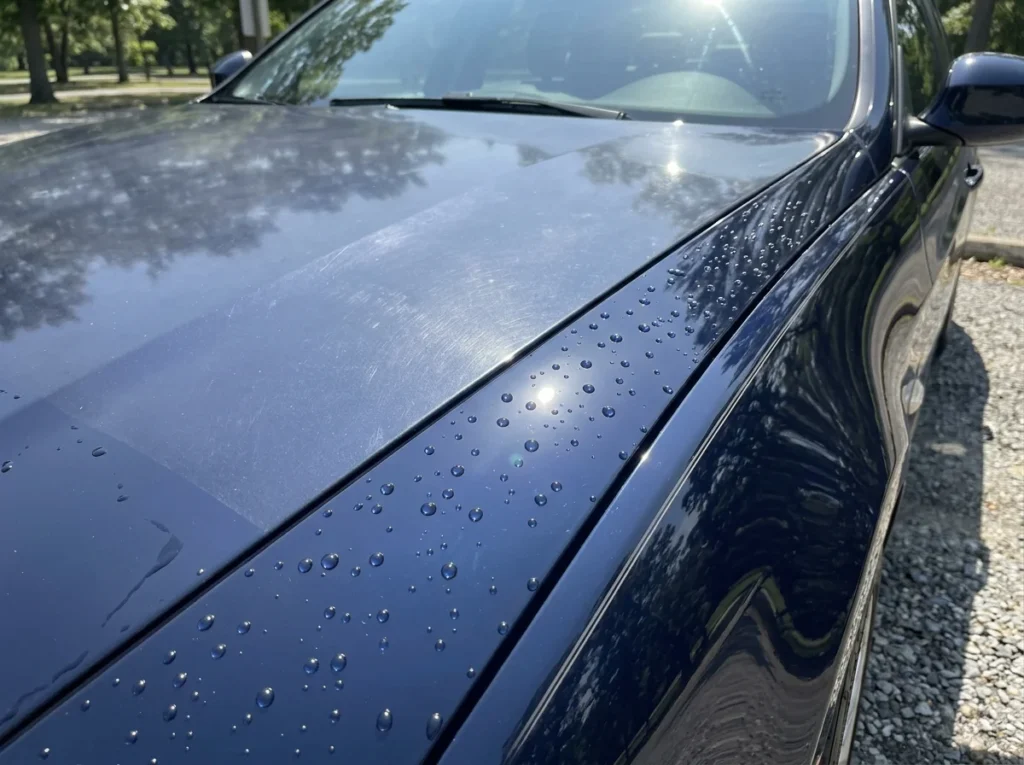
Some, but not completely. Wax puts a thin layer over the finish that takes part of the environmental wear, and it brings back shine.
It won’t make paint UV-proof, and no wax blocks every bit of ultraviolet radiation. Durability varies with the product, the weather, and how often the car gets washed. A paint sealant is a related option that generally lasts longer. Neither repair clears coat that’s already cracked or peeling.
Clear Coat Protection Longmont: Which Options Help?
Each option puts something between sunlight and the clear coat. Clear coat protection can help reduce exposure to environmental elements, although none stops UV damage entirely.
Wax Protection
Easy to apply and good for gloss, but it wears off fastest and needs regular reapplying.
Paint Sealant
A synthetic product that bonds to the surface and typically outlasts wax, though it’s still a thin layer that wears off.
Ceramic Coating
A hardened protective coating applied over the clear coat for durable surface protection. It guards what’s there. It can’t restore a clear coat that has already failed.
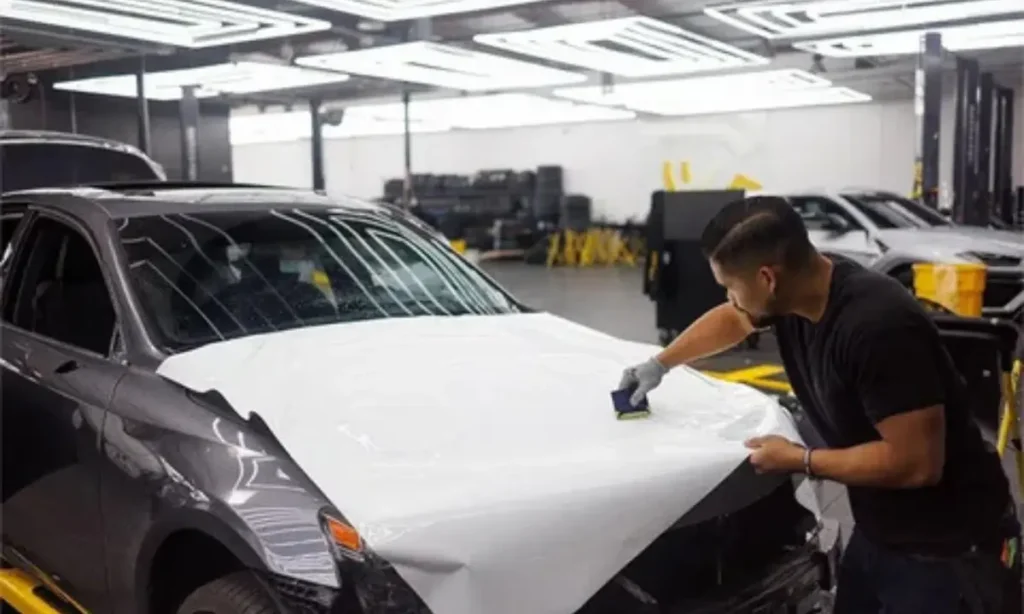
Paint Protection Film
A physical film laid over the paint instead of a liquid. It adds a thicker barrier and needs proper installation and care.
| Protection Option | Main Role | Important Limitation |
| Wax | Adds a temporary protective layer | Does not make paint UV-proof |
| Paint Sealant | Provides longer-lasting surface protection | Does not repair failed clear coat |
| Ceramic Coating | Adds a durable protective coating | Does not restore peeling clear coat |
| Paint Protection Film | Adds a physical protective layer | Requires proper installation and care |
What Happens When UV Damage Becomes Clear Coat Failure?
There’s a real gap between deterioration and failure. Early on, the clear coat is intact but tired: reduced gloss, mild oxidation, and a finish that looks older than it should. Later, it’s cracking, flaking, or gone in patches, with the base coat showing.
If the clear coat is still there, paint correction can sometimes help. Polishing levels off a thin layer of damaged surface and can bring back clarity on paint that’s dull but sound.
It can’t replace the clear coat that has peeled away, since there’s nothing left to work with. When failure is widespread, refinishing is usually the fix rather than ordinary detailing. Not every UV-damaged finish is recoverable.
Frequently Asked Questions
Can UV Exposure Cause Clear Coat Peeling?
It can contribute. Long-term UV exposure degrades clear coat and is linked to advanced failure, including peeling. It’s rarely the only cause, though. Poor adhesion, earlier repairs, and age play a role too.
How Do You Know If Clear Coat Is Failing?
Dullness and oxidation are early warnings. Cracking, lifting edges, and flaking mean the coating is breaking down. Peeling with a flat or chalky basecoat showing means the clear coat has failed in that spot.
How Long Does It Take for UV to Damage Clear Coat?
There’s no universal timeline. Sun exposure, parking conditions, vehicle age, clear coat condition, maintenance, and protection all change the pace.
Can UV-Damaged Clear Coat Be Restored?
Sometimes. If the clear coat is intact but dull or oxidized, correction may improve the surface. If it has peeled, polishing can’t recreate the missing coating.
Does Parking in the Shade Prevent UV Damage?
Not fully. Shade cuts direct sunlight and heat, which helps, but UV still reaches a car through scattered and reflected light. Shade reduces exposure without eliminating it.
How Can I Protect My Car’s Clear Coat From Colorado Sun?
Park under cover when you can and wash gently and regularly. Use a suitable protective product and maintain it. Deal with early dullness before it turns into cracking.
Protect Your Paint From the Longmont Sun
UV damage builds slowly, and lost gloss usually shows up long before cracking or peeling. Sunlight uses up a little more of the clear coat’s protection every season, so a car that sits outside most of the time is the one to keep an eye on. Catching that flat, dull look early gives you far more options than waiting until the paint starts to flake.
If your paint is starting to look tired, Izzy’s Auto Detailing LLC in Longmont offers exterior detailing, paint correction, and ceramic coating. Correction can help surface-level deterioration while the clear coat is still intact, and a coating can help protect the finish afterward. Reach out to have your car’s paint looked at and talk through what makes sense for it.