Take a rag and some drugstore wax to a luxury vehicle the way you would a fifteen-year-old sedan, and you’ll usually find out the hard way why that’s a mistake. Softer paint, Alcantara seats, and real wood trim: none of it behaves like an average commuter car, and treating it that way is how owners end up paying for correction work that could have been avoided. Luxury car detailing calls for matching the method to the material, not running the same routine across every surface.
This guide covers how to read your paint correctly, protect it long-term, keep wheels and brake dust under control, and know when a job is safe to do yourself versus when it’s worth paying a professional.
Why High-End Vehicles Demand a More Careful Approach
Not all clear coats are built the same. Some manufacturers spray it on thinner or use paint formulas that mark up faster under an aggressive polisher or a stiff wash mitt. That doesn’t mean every luxury car is made of glass, but it does mean the method that works fine on your neighbor’s car might leave swirl marks on yours.
There’s also the material mix. One car might carry painted panels, a carbon fiber splitter, a satin wrap, and brushed aluminum trim, all within a few feet of each other. If you run one all-purpose cleaner across the whole thing, you’ll likely streak the wrap or dull the aluminum while the paint looks fine.
Understanding Your Paint Finish Before You Start
Gloss, Matte, Satin, and Wrapped Surfaces
Gloss clear coat is fairly forgiving through a normal wash, polish, and wax cycle. Matte and satin finishes flip that script, since most waxes and compounds exist to add shine, and shine is the enemy of a flat finish. Put the wrong product on a matte hood, and you’ll get blotchy shine in some spots and none in others.
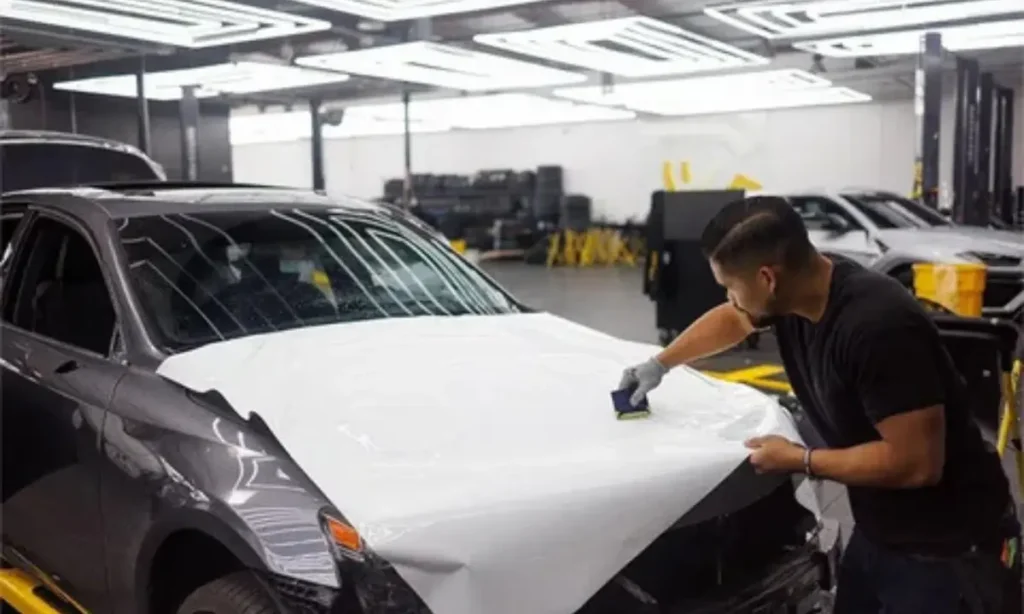
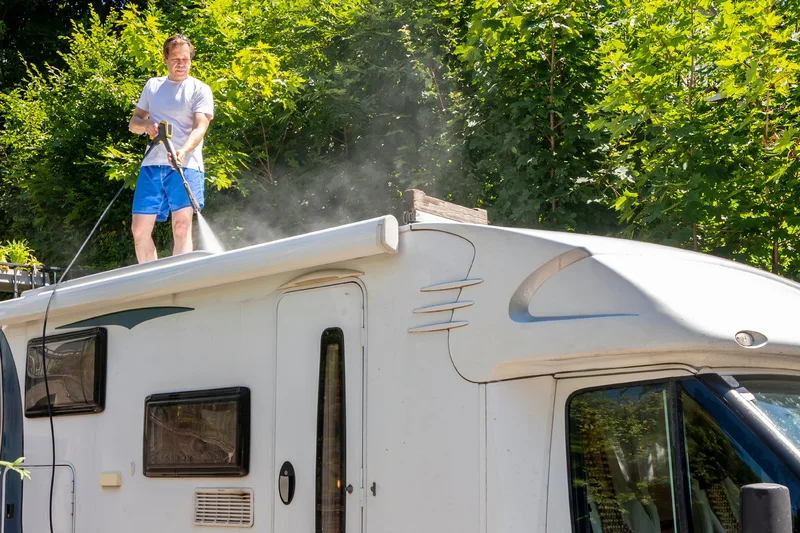
Wraps carry a different risk, mostly around the edges. Seams near door handles and mirrors can lift under strong solvents or a pressure washer at close range, so keep the nozzle a few feet back near those seams.
| Pro Tip: When you’re not certain what a finish can tolerate, a two-bucket wash with pH-neutral soap is about as safe as it gets. Hold off on polishes, sealants, or coatings until you’ve confirmed compatibility. |
Exterior Paint Care and Long-Term Protection
Practice counts for as much as product choice. Rinse first, so you’re not grinding grit into the clear coat on contact, and keep a separate mitt for wheels, since brake dust carries abrasive particles that have no business near paint. Straight, light passes beat scrubbing in circles, and a proper microfiber towel dries better than an old bath towel dragged across dirt.
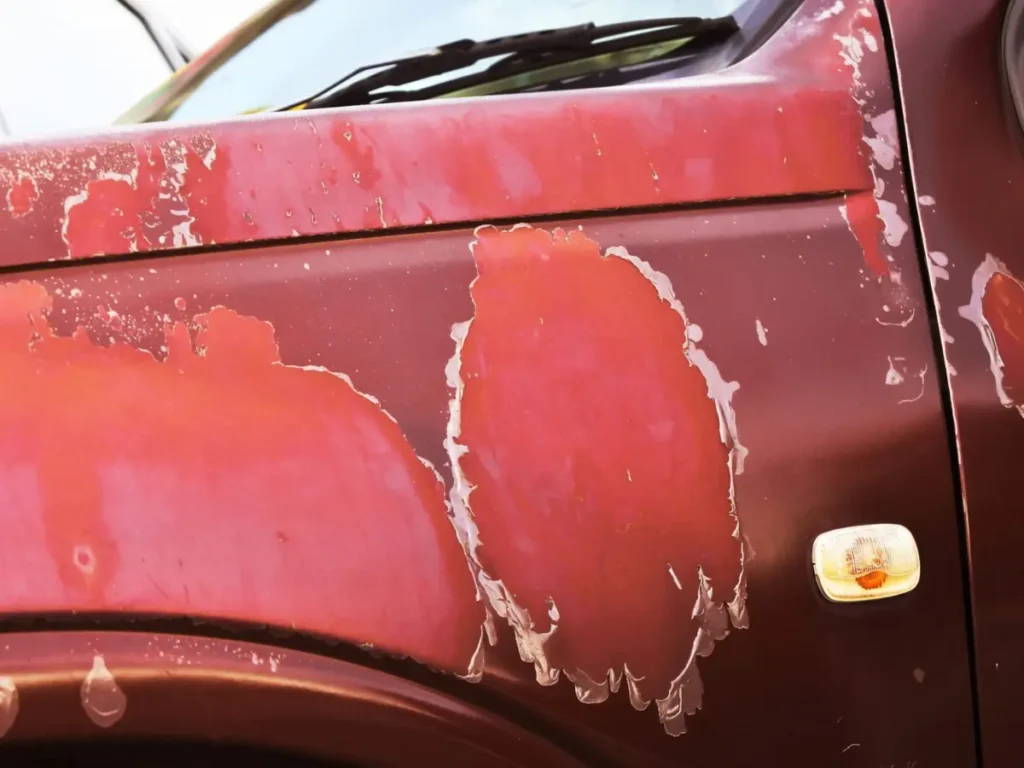
Contamination is what most owners miss. Run a bare hand over paint that looks spotless, and if it feels gritty instead of smooth, something has bonded to the surface. Tree sap and mineral deposits sit slightly above the clear coat until you use a clay bar treatment to remove them. If you polish over that layer first, you’re just dragging hard particles across the paint, creating fresh scratches while trying to fix old ones.
Correction is staged work, starting light and stepping up only if needed. How much a car can safely absorb depends on how much clear coat is left, and that’s not something you can eyeball. Push past what it supports, and you thin it permanently, which is why heavier jobs usually go to someone equipped to measure film thickness first.
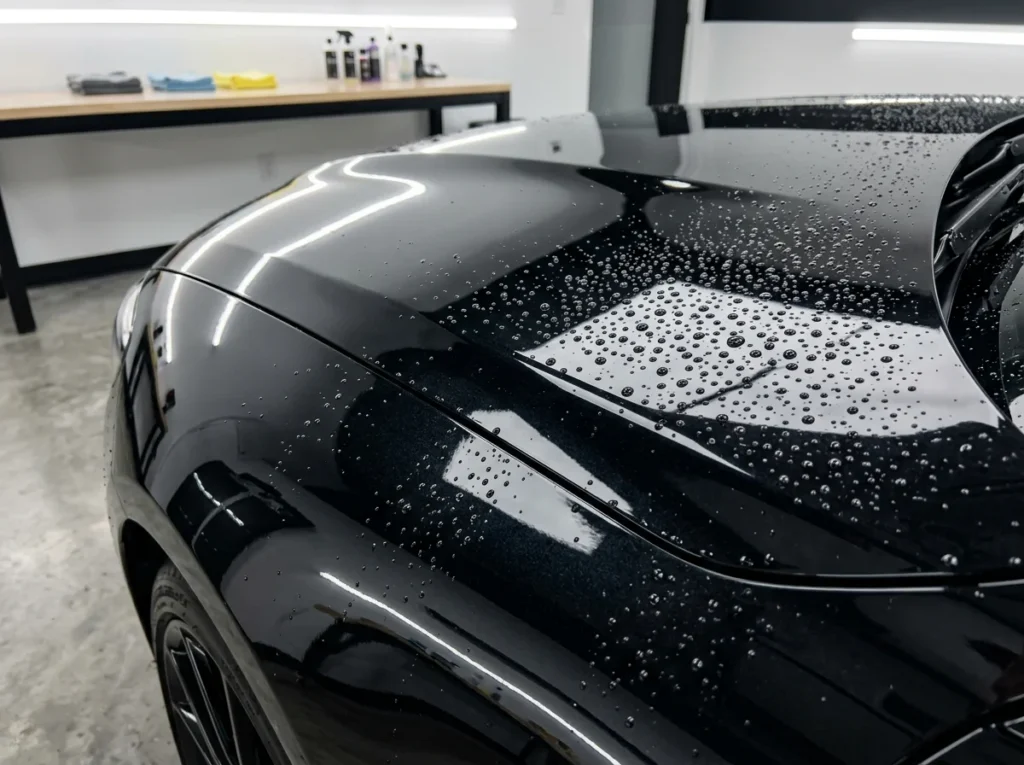
Once paint is clean and corrected, a few protection options exist, and none of them does everything.
- Car waxing can give a luxury vehicle a warm, deep appearance, but that protection fades faster than longer-lasting options such as sealants and ceramic coatings.
- Paint sealant trades some of that classic look for longer staying power and better UV resistance.
- Ceramic coating resists chemical staining well but won’t stop a rock chip or a careless scratch.
- Paint protection film absorbs impact on high-wear spots like the hood and bumper, built for that job rather than for shine.
A garage-kept weekend car and a daily driver parked outside don’t need the same answer. The right choice usually comes down to how much care you’re reasonably going to keep doing.
Living With a Ceramic Coating or PPF
A fresh coating or film isn’t the finish line. Both still need regular washing with a mild soap, and both wear down early under degreasers or rough pads. PPF edges near mirrors and handles deserve extra gentleness, since repeated pressure is how an edge starts to lift. Your installer can tell you exactly what’s safe going forward, and that advice beats any general guideline.
Wheels, Tires, and Brake Dust
Wheels absorb more abuse than nearly anything else on the car, and brake dust is the main reason. It’s made of metallic particles and friction material thrown off hot pads, and it clings to warm wheels right after a drive. Left for a week or two in summer heat, it turns tougher to remove and can leave a dull, pitted look behind. Washing wheels with the rest of the car, instead of treating them as an occasional job, keeps that buildup from taking hold.
Wheel finish matters too. Polished or forged aluminum reacts more to strong acid-based cleaners than powder-coated wheels, and carbon fiber wheels usually need something gentler still.
Tire dressing deserves a lighter touch than most people give it. A thick, glossy coat looks great for a day, then starts pulling in dust like a magnet, while thinner, more frequent applications hold up better between washes.
Caring for Premium and Specialty Interior Materials
Leather dries out and cracks without conditioning, particularly on seats that see hours of direct sun. Finished leather with a protective topcoat can take more than unfinished or aniline leather, which soaks up oils and dyes more readily and can darken or stain under the wrong product.
Alcantara and similar suede materials are a different animal. Most leather conditioners leave them stiff, matted, or discolored, so they need a fabric-safe cleaner and a soft brush instead, since a cloth pushes dirt further into the weave.
Wood trim rarely needs more than light dusting and an occasional wipe with a manufacturer-approved cleaner, since generic polishes can dull the grain over time. Carbon fiber and metal trim scratch easily under an abrasive pad, and touchscreens deserve the same caution, since ammonia-based glass cleaners can strip the anti-glare coating on some displays.
| Effective Tip: Keep three separate microfiber towels: one for leather, one for glass and screens, and one for wheels. Mixing them up is one of the fastest ways to residue somewhere it doesn’t belong. |
How Often Should a Luxury Vehicle Be Detailed?
There’s no universal schedule here. A garage-kept weekend car needs far less than one driven daily through a Colorado winter, and your owner’s manual and the car’s actual condition should carry more weight than any general chart, including this one.
| Maintenance Task | General Guidance | Colorado/Longmont Specific Notes |
| Hand wash | Every 1 to 2 weeks | Include an undercarriage flush in winter to wash off liquid magnesium chloride and road salt. |
| Wheel & brake dust cleaning | Every wash | High-performance luxury brake dust bakes quickly under intense summer UV; clean regularly. |
| Clay bar / Decontamination | 1 to 2 times a year | Perform in spring after winter chemical buildup, or when paint feels rough to the touch. |
| Wax/sealant reapplication | Every 1–2 months (wax) / Every 4–6 months (sealant) | Standard wax degrades fast under high-altitude UV; synthetic sealants or ceramic coatings perform much better locally. |
| Ceramic coating maintenance | As the installer recommends | Use pH-neutral soap; decontamination washes help remove seasonal road grime and magnesium chloride. |
| Leather conditioning | Every 2 to 3 months | Dry Front Range air and high elevation (~5,000 ft) UV dry out untreated luxury leather rapidly. |
| Interior deep clean | Every 3 to 6 months | Clean more frequently during spring dust storms or winter tracking of mud and slush. |
Mistakes That Damage Expensive Finishes
A few patterns cause most of the costly problems we see:
- Dish soap, which strips wax or sealant and dries out rubber seals
- One mitt for the whole car, dragging brake dust onto the paint
- Drying with an old cotton towel instead of microfiber
- Leather conditioner used on Alcantara without checking compatibility
- All-purpose cleaner on wood, carbon fiber, or a touchscreen
- Polishing before decontaminating, grinding particles into the clear coat
- Harsh degreasers or rough pads on a coated or wrapped surface
- Letting sap or construction dust sit for weeks in one spot
When DIY Makes Sense
A lot of routine care is genuinely fine to handle yourself: hand washing, glass cleaning, and light leather conditioning. All of it is manageable once you know which products suit your paint and interior, and it mostly takes patience and gentler products than whatever’s under the sink.
When Professional Detailing Is the Better Option
Some jobs carry real risk if you get them wrong. Paint correction means knowing how much clear coat you’re working with and stopping before thinning it too far, which is hard without the right tools. Coating and PPF installation depend on a properly prepped surface, and skipping that step means the product won’t bond correctly, something you might not notice until months later.
It’s worth calling a professional when:
- Swirl marks or oxidation persist even after regular washing
- You’re getting the car ready to sell or trade
- The interior includes materials you’re not confident handling, like Alcantara or exotic leather
- You want a coating or film applied the first time correctly
Choosing a Detailer for a High-End Vehicle
A shop that’s great with SUVs and pickups isn’t automatically qualified for a car with exotic leather or a satin wrap. Ask whether they’ve worked with your specific paint or interior material, what products they use, and whether they can show past work on something comparable. A detailer who asks more questions than you expected before quoting a price is usually a good sign.
FAQs
How often should I actually wash a luxury car?
You should wash your car every 1 to 2 weeks, depending on how and where it’s kept. A garage-kept weekend vehicle is fine on a biweekly schedule. However, if it’s a daily driver parked outside—especially during a Colorado winter—wash it weekly with a thorough undercarriage flush to remove sticky liquid magnesium chloride and road salt before they corrode metal components.
Can I put regular car wax on a matte or satin finish?
No. Most waxes boost gloss, which is the opposite of what a matte finish needs. You’ll get patchy shine that’s harder to fix than the dull look ever was. Stick to products the manufacturer has cleared for that finish.
Is ceramic coating worth it if I still have to wash the car regularly?
Yes. It makes paint more resistant to stains, chemicals, and UV damage, and washing gets easier since less grime sticks. It just won’t stop a rock chip or a scratch from a dirty towel, so regular washing still matters.
Final Thoughts
Most of what protects a luxury vehicle comes down to a short list: know what your paint and interior materials can handle, match products to the surface, stay ahead of brake dust, and account for how the car is stored and driven. Knowing when to hand a job to a professional belongs on that list too, since a few mistakes are expensive enough that they’re not worth risking on your own.
If you’re in Longmont, Colorado, Izzy’s Auto Detailing LLC brings years of hands-on experience with both exterior and interior detailing, including machine polishing, clay bar treatment, paint correction, and ceramic coatings. Izzy and his team treat every vehicle with the same care they’d want for their own.
Call 720-266-1760 to schedule an appointment and get your vehicle the care it deserves.