You take the car for a wash and dry it, and the car appears pristine. Then you run a hand across the hood, and the paint feels rough, almost like fine sandpaper. This is not to say that the washing was poor quality. Cleaning with soap and water removes loose dirt, but some dirt stays stuck to the paint and won’t come out, such as brake dust and small bits of metal. It is generally invisible but can be felt by your fingertips. Getting it off takes a separate step. Paint decontamination in Longmont, CO, like anywhere else, means removing that stuck-on material so the paint is smooth again. Read on to see what causes the rough feel, how chemical and mechanical methods differ, and how to tell when your car needs it, including before you wax.
Why Washed Car Paint Can Still Feel Rough
Washing lifts loose dirt and road film. It does far less about material that has bonded to the paint and hardened there. Common driving and parking habits allow brake dust and other iron particles, industrial fallout, road tar, tree sap, paint overspray, and mineral deposits from hard water to settle on vehicle paint. Being near heavy traffic and construction brings dust and debris into the mix. The paint still reflects light, so a car with surface contamination often looks clean. Your hand notices more than your eyes do. If the hood feels rough after a good wash, something is probably still attached to it.
What Paint Decontamination Does to the Surface
Automotive paint decontamination means removing the contamination a normal wash leaves behind. Because that material is bonded to the paint, more washing does not help. It takes a chemical or mechanical treatment to remove it.
The payoff shows up in what follows. Removing bonded contamination first gives polishing a cleaner surface to work on, and wax or sealant goes onto paint that is smoother to begin with. Paint that has been through vehicle paint decontamination also tends to look clearer, since less is sitting on the finish.
Chemical vs. Mechanical Paint Decontamination
The two methods work differently, and a detailer may use one, both, or neither depending on what the paint shows.
Chemical Paint Decontamination
Chemical paint decontamination relies on products formulated for particular contaminants. Iron removers act on suitable iron contamination, such as particles from brake dust. Tar remover is the product for tar-type residue. No single product covers everything, and sap, overspray, and mineral deposits may call for different treatments. When a chemical step is used, it usually comes first, before clay touches the paint.
Mechanical Paint Decontamination
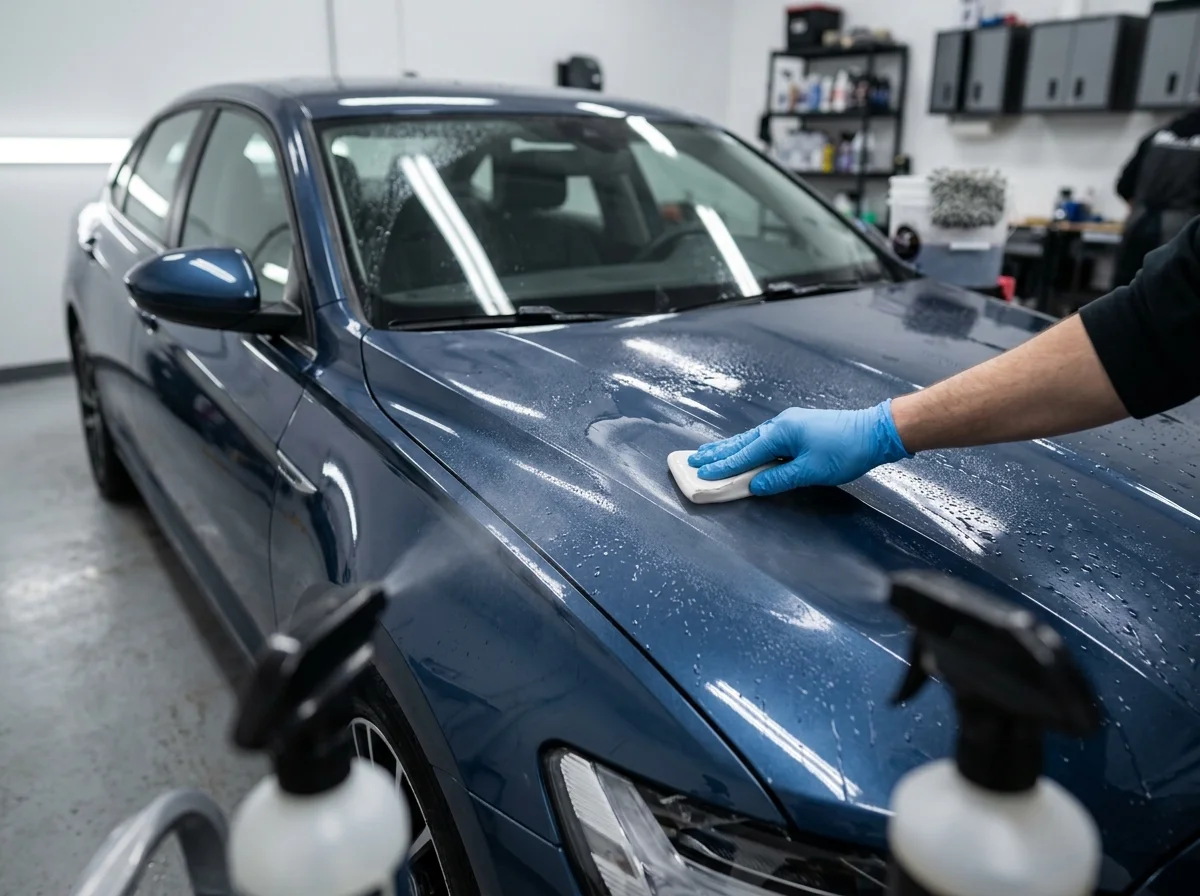
Mechanical paint decontamination physically removes what remains. In a car clay bar treatment, a detailer moves a clay bar across paint kept wet with a suitable lubricant, and the clay lifts bonded material off the surface. The lubricant reduces friction and the risk of marring. Clay is not a substitute for every chemical treatment.
| Aspect | Chemical Decontamination | Mechanical Decontamination |
| Main approach | Product formulated for a specific contaminant | Clay moved across lubricated paint |
| Typical targets | Suitable iron contamination, tar-type residue | Bonded contamination that remains after washing |
| Products | Iron remover, tar remover | Clay bar with suitable lubricant |
| Where it fits | Often early in surface preparation | Used if contamination remains after assessment |
Signs Your Car Actually Needs Paint Decontamination
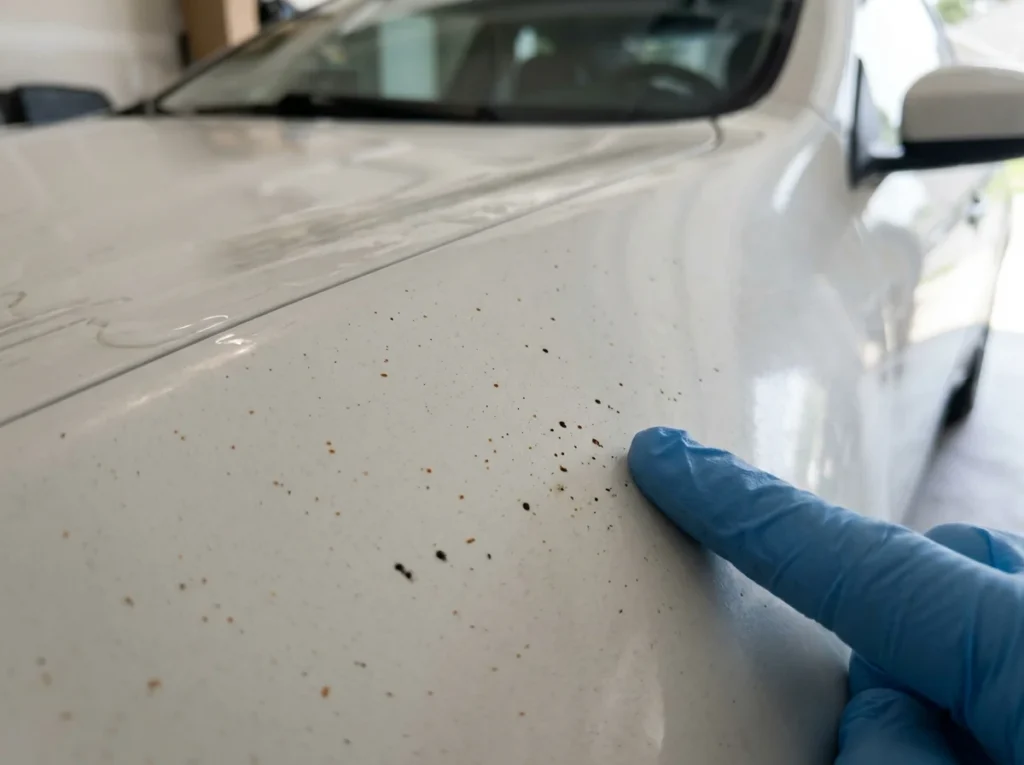
After a thorough wash, look at the paint in good light and run a clean hand across it. These are the usual signs:
- Paint that feels gritty or rough after washing
- Orange or rust-colored specks, most visible on white and other light colors
- Tar, sap, or road residue that survives a wash
- Regular exposure to heavy traffic or construction dust
- Polishing or protection coming up on paint that is not smooth
| TIP: A Clean Car Is Not Always a Decontaminated CarA car can look spotless after washing while contamination remains attached to the paint. Shine and color say little about it. A clean hand across the surface gives clues that appearance hides, though it only hints at what is there. A rough feel is a reason to look closer. |
When Paint Decontamination Belongs in Paint Protection Prep
Is paint decontamination necessary before waxing? Not automatically. A car that is washed regularly, kept out of the weather, and smooth to the touch may need nothing beyond a good wash before wax. A car with a gritty feel, tar, or sap on the paint should have that dealt with first; otherwise, the car wax goes on over rough spots that decontamination would have removed.
The same logic applies to paint sealants and ceramic coatings. How much surface preparation they call for depends on the condition of the paint, the contamination present, and the type of protection being applied.
When a Two-Step Decontamination Approach Makes Sense
Many cars do not need every step. A detailer typically washes and assesses the paint, uses a chemical treatment where appropriate, and then reassesses before deciding whether clay is needed at all. If the paint feels smooth after the chemical stage, the second stage may have nothing left to do. Heavier contamination may call for both, a combination often described as two-step decontamination, followed by inspection and then polishing or protection if the paint calls for it.
Does Every Vehicle Need the Same Level of Decontamination?
There is no standard schedule. The amount of decontamination a vehicle needs depends on how it is driven, where it is parked, and what is left on the paint after washing. A few things shape that:
- Highway commuting versus mostly local driving
- Garage parking versus street parking near trees or industrial areas
- Exposure to road debris and brake dust
- The current state of the paint
- Whether polishing or new protection is planned
Checking the paint after a wash is a better guide than the calendar.
How Paint Decontamination Fits Into a Professional Detail
When decontamination is needed, it typically follows the wash and comes before polishing or paint protection. In professional detailing, it is often part of an exterior detail, with clay bar treatment used for stubborn surface contamination on paint that is going to be polished or waxed. Machine polishing and car waxing may follow, depending on the vehicle’s condition. Polishing is a separate step aimed at paint defects such as swirl marks and oxidation, so it does not replace decontamination. A detailer usually starts by washing the car and looking the paint over, then decides which of these steps the vehicle actually needs.
Frequently Asked Questions
Why Does Car Paint Need Decontamination?
Because a wash only removes what is loose. Brake dust, tar, sap, and similar material stay attached and leave the paint rough, and they are still there when polishing or protection goes on.
How Do You Find Contaminants On Car Paint?
Wash and dry the car first, then look over the paint in good light for specks, tar, or residue. Run a clean hand across it too. Roughness after a proper wash suggests contamination, though it does not tell you what kind.
Is Paint Decontamination Necessary Before Waxing?
Not automatically. It depends on whether bonded contamination is present. Smooth, well-kept paint may only need a wash, while gritty paint or visible tar and sap is better treated first.
How Often Does a Car Need Paint Decontamination?
It varies with exposure. Frequent highway miles and outdoor parking add contamination faster than short local trips and garage storage, so watch the paint after washing and factor in any polishing or protection you have planned.
Does a Clay Bar Remove All Types of Paint Contamination?
No. Clay physically lifts bonded material off the surface, but it does not chemically break down contamination the way an iron remover or tar remover does, and it does not correct scratches or oxidation. Those belong to polishing.
Where Can I Get Car Paint Decontamination in Longmont, CO?
Look for a Longmont detailer that offers exterior detailing with paint decontamination, or clay bar treatment for stubborn surface contamination. Ask what your paint needs before booking, since not every car needs every step.
Give Your Paint a Closer Look After Washing
A wash leaves paint looking clean but not always feeling smooth. Whether the paint needs decontamination depends on what is still attached to it and what comes next for the car, whether that is polishing or new protection. Try running a clean hand across the hood after your next wash. If it feels rough, Izzy’s Auto Detailing LLC in Longmont, CO offers clay bar treatment and exterior detailing that address surface contamination. Get in touch and tell them what you are noticing on the paint.