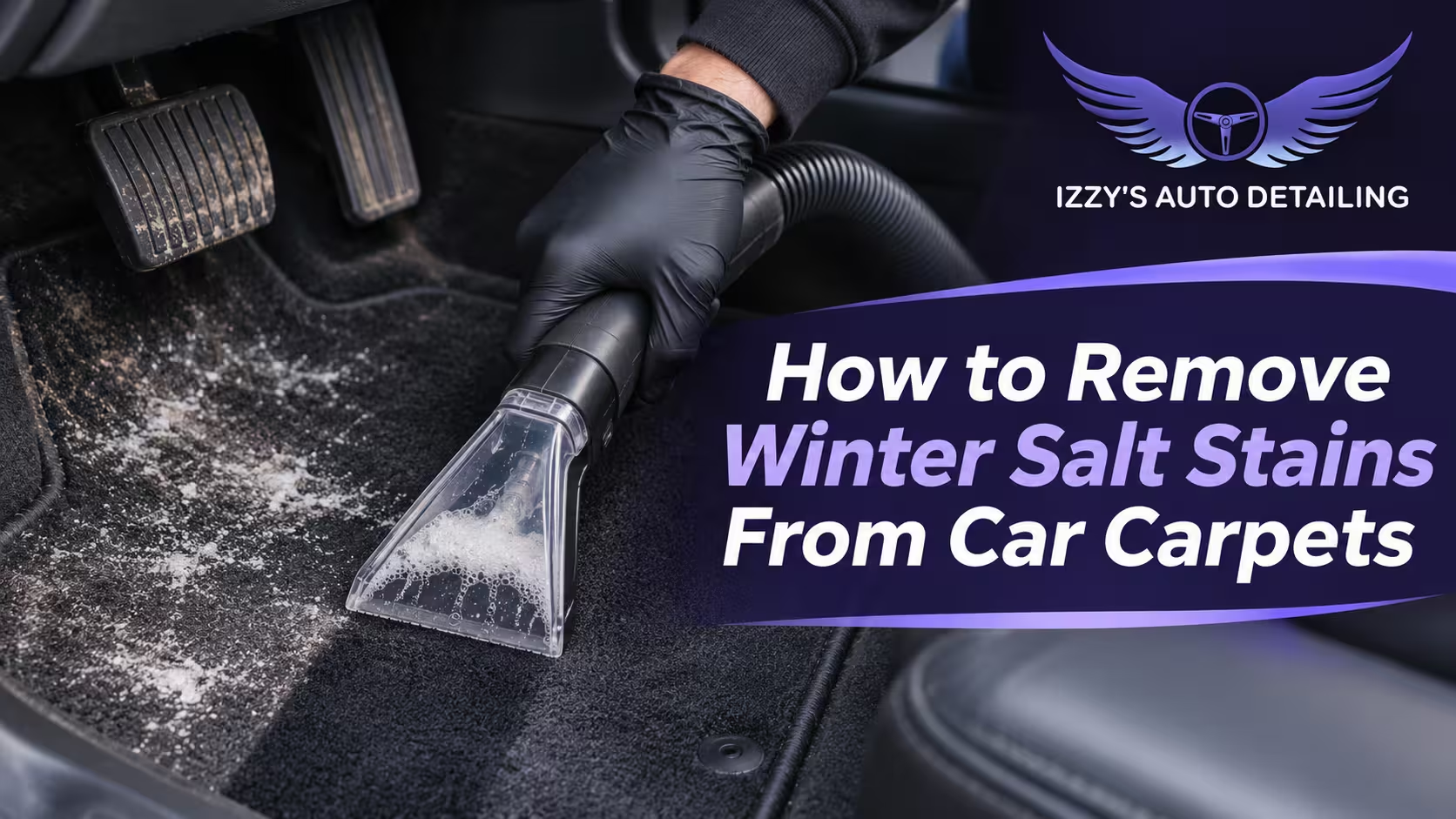
You climb out of the car after a week of slush and spot a chalky white ring spreading across the driver’s footwell. Those are most likely salt stains on car carpet, and a simple routine gets them out. Vacuum up the loose salt and grit while the carpet is still dry. Mist on a carpet-safe cleaner, loosen the crust with a soft brush, then blot or extract the dissolved residue. Finish by drying the carpet all the way through. Fixed carpet and carpeted mats need a different approach. In this article, you’ll also see why white marks come back and how to prevent them.
Why Road Salt Leaves White Stains on Car Carpets
Road crews spread salt and liquid deicers to keep streets passable, and every trip through that slush loads some onto your boots. It melts off inside the cab and soaks into the carpet. The water evaporates, but the dissolved salt stays behind as road deicing residue, a white or gray mineral crust.
Sodium chloride, better known as rock salt, is the most common source. Many brines also use magnesium chloride and calcium chloride because they keep working in colder weather, and the exact mix varies from town to town.
Salt collects wherever your feet land, especially the heel area and the carpet under the mat. Each storm adds another layer, so interior salt buildup gets harder to lift as the season goes on. Not every white mark is salt, though. Dried cleaner, spilled drinks, or a leak can leave similar marks, so think about the source before you treat it.
What to Prepare Before Cleaning Salt-Stained Car Carpets
Line up your gear before any liquid touches the carpet. Stopping halfway to hunt for a towel leaves dissolved salt sitting in the fibers. Here’s what you’ll need:
- A vacuum with crevice and brush attachments
- A soft-bristle cleaning brush
- Clean microfiber towels
- A spray bottle
- An automotive carpet-safe cleaning solution
- Warm water, if your cleaner and carpet allow it
- A wet-dry vacuum or carpet extraction equipment for deeper cleaning
Read the product label and check your owner’s manual for interior care guidance before you start. Some carpets react badly to the wrong cleaner, and the label spells out dilution and application.
How to Remove Salt Stains From Car Carpets Step by Step
Start dry and stay dry as long as you can. Pour water on loose salt, and you’ve made fresh brine that wicks straight into the padding, which makes winter carpet cleaning much harder.
Step 1: Remove the Floor Mats and Vacuum Winter Debris
Pull the mats out using the clips or hooks your manual describes, then shake them out outside. Vacuum winter debris next, working the brush attachment in several directions to lift crystals from the pile. Hit the heel area, seat edges, and whatever you can reach under the seats. Leave wiring and trim panels alone.
Step 2: Choose a Suitable Cleaner and Test a Small Area
Pick a cleaner made for automotive carpet or a dedicated deicer stain removal product. Diluted vinegar works on some carpets but can affect certain dyes, so it isn’t a safe default. Mix your choice according to the label’s directions and test a hidden spot under a seat, checking it for fading once it dries.
Step 3: Loosen the Dried Salt Deposits
Mist the cleaner onto one small section instead of soaking the footwell, and give it the dwell time the label calls for. Then brush lightly back and forth to loosen dried salt deposits. Hard scrubbing frays the pile and pushes residue deeper, so let the cleaner do the work.
Step 4: Blot and Extract the Released Residue
Loosened salt is still salt, and it dries right back into a white ring unless you lift it out. This is the step that actually helps you remove salt from car carpet. Press a clean microfiber towel into the area and lift, switching to a fresh face as it picks up residue. On larger areas, carpet extraction equipment or a wet-dry vacuum pulls out dissolved salt and moisture far better than towels. Make slow overlapping passes instead of flooding the carpet.
Step 5: Dry the Carpet Completely
Pull out the last moisture with dry towels or a final extraction pass. Open the doors or windows to dry the car interior after cleaning, and leave the carpet uncovered. Skip heat guns and high-heat dryers since they can damage fibers and backing. The surface can feel dry while the padding still holds water, so press down firmly before reinstalling the mats.
How to Clean Salt-Stained Floor Mats Without Damaging Them
Take the mats outside the car to clean salt-stained floor mats properly. Carpeted mats and rubber liners use different materials, so each one needs its own approach.
Cleaning Carpeted Floor Mats
Vacuum the loose salt, then apply a compatible carpet cleaner and loosen the residue with a soft brush. Blot or extract the solution along with the dissolved salt. Let the mats dry flat or hang them until the backing is completely dry, because a damp mat holds moisture against the carpet below.
Cleaning Rubber Floor Mats
Rubber mats are generally easier to clean than carpeted floor mats. Knock off loose debris and wash them with a mild cleaner, paying attention to the grooves where salt hides. Rinse only if the mat maker’s instructions allow it, then let them air-dry fully. Skip silicone sprays and shiny dressings on winter floor mats because a slick mat near the pedals is dangerous.
Why Do White Salt Stains Return After Cleaning?
A clean-looking surface doesn’t always mean the salt is gone. Dissolved salt you didn’t fully extract can sit deep in the fibers and creep back up as the carpet dries.
Leftover cleaner and residue dry right back into the same white haze. Too much water carries salt into the padding, where it later wicks back to the surface. Fresh slush from your boots adds new salt on top of your work. Some people also clean the visible spots and miss the carpet under the mats.
Light application and thorough extraction are what remove white stains from car carpet for good. If a spot stays damp or white marks appear without any winter exposure, look for another cause like a leak before you treat it as salt again.
How to Prevent Winter Salt Stains in Your Car
A few minutes a week beats scrubbing out a whole season of crust in spring. Longmont and the rest of Northern Colorado see plenty of snow and freeze-thaw swings, which means months of treated roads. These habits help prevent winter carpet stains:
- Use well-fitting all-weather or rubber mats with raised edges.
- Shake out and clean removable mats regularly.
- Vacuum winter debris before it grinds into the fibers.
- Knock snow and slush off your boots before you climb in.
- Check the carpet under the mats for moisture and residue.
- Clean up promptly after a stretch of heavy road treatment.
- Let damp mats and carpet dry fully before covering them.
Build them into your winter vehicle maintenance routine.
When Is Professional Carpet Cleaning Worth Considering?
Routine vacuuming and spot cleaning handle most winter messes, but deeper buildup is a different story. Consider professional help when stains survive a careful home cleaning or keep coming back. Large sections of salt-soaked carpet are another good reason. Moisture trapped in carpets and padding often calls for carpet extraction equipment that reaches deeper than surface cleaning can. No one can promise every stain will disappear, but professional interior detailing gives stubborn spots a better shot. If the carpet stays damp no matter what, find the source instead of piling on more cleaner.
Frequently Asked Questions
Can white salt stains permanently damage car carpet?
Usually not, as long as you deal with them reasonably soon. Ordinary salt residue is mainly a cleaning problem. Trouble starts when layers build up all season while moisture keeps cycling through, which can stiffen the fibers and make the residue much harder to lift.
Can vinegar remove road salt stains from car carpets?
It can help with some road salt carpet stains, but it isn’t right for every carpet. A properly diluted vinegar solution may break down certain deposits, while some dyes and materials react poorly to it. Test a hidden spot first and follow the product label. Blot or extract the solution afterward instead of letting it dry in the fibers.
How often should car carpets be cleaned during winter?
It depends on how much snow and slush ends up inside your car. A daily commuter on treated roads needs to clean far more often than someone who parks in a garage and skips stormy days. Vacuum regularly and shake out the mats after messy trips, treating visible residue promptly instead of following a fixed calendar.
Final Thoughts
Salt comes out of carpet in a set order: clear the dry debris first, then work in a material-safe cleaner, extract the loosened residue, and dry everything completely. Regular mat cleaning stops most buildup before it starts. Izzy’s Auto Detailing LLC has served Longmont and Northern Colorado drivers since 2017, and Izzy brings more than 15 years of detailing experience to the job. If winter salt won’t budge after your best effort, professional interior detailing is worth a look.