You reach for the door handle on a warm afternoon, and the panel next to it grabs at your fingertips. The same issue could occur on the center console lid or the dashboard. Sticky car interior surfaces are both an annoyance and don’t always begin in the same manner. Some are covered with a substance that can be rubbed off, such as an old soda or a protectant that has not dried completely. Most people experience tackiness due to breakdown of the surface material.
To the touch, these two problems seem similar, but they require very different solutions. Here are some of the reasons the tackiness occurs and how to differentiate between residue and damage. You’ll also learn how to clean safely and how to know when cleaning will not help.
Why Different Car Interior Surfaces Become Sticky
The sticky dashboard and door panel can come from a range of completely different causes. The material matters. So do its location and whatever has touched it over the years. The majority of cases are the result of three main areas.
Residue Left by Spills and Everyday Use
Sugar is the typical culprit in the cup holders. A splash of sweet tea or a coffee drip dries into a thin layer that can stay tacky for months. Your hands add more. Grab handles and window switches are coated with skin oil and sunscreen every time you drive. Those high-contact spots trap dust too, and the mix becomes a grimy film you feel before you see.
Cleaning Products and Interior Dressings
Excess product can lead to the very issues that it was designed to solve. A lot of indoor protectants are applied to leave a thin coating. Put on a new layer each week, leaving the old layer intact—the layers add up. It can feel slick at first and tacky later on a hot day. Dust clings to that film, so the panel looks dull and feels gritty. Any cleaning that is not made completely clean leaves a similar residue.
Heat, UV Exposure, and Material Deterioration
There seemed to be no spill, no product used, and yet the surface was still tacky. That is where the material comes in. A dashboard gets hit by heat and UV radiation all summer, and it contributes to its deterioration. Certain vinyl and plastic components contain plasticizers. These are additives that keep the material flexible. As they slowly work toward the surface, they can leave an oily film.
Newer cars also employ polyurethane soft-touch coating. Imagine a very thin layer of rubber paint on a hard plastic. This coating can soften and become gummy as it ages. Not all dashboard gunk is caused by plasticizers. The actual reason will depend on the material and state of the part.
How to Tell Surface Residue From Deteriorating Interior Trim
Spend time figuring out what you’re up against before grabbing a bottle of cleaner. Guesses can be time-consuming or exacerbate a worn surface. There is no fast home test to give a definite response. There are still a few hints that can help you to get on the right track. The following table outlines some common signs and what they might indicate.
| What You Notice | Possible Explanation | What It Suggests |
| A sticky patch near a cup holder | Dried drink or food residue | Localized cleaning may help |
| A greasy film after applying dressing | Product buildup | Cleaner compatibility needs checking |
| Broad tackiness across a soft-touch panel | Possible coating deterioration | Cleaning alone may not solve it |
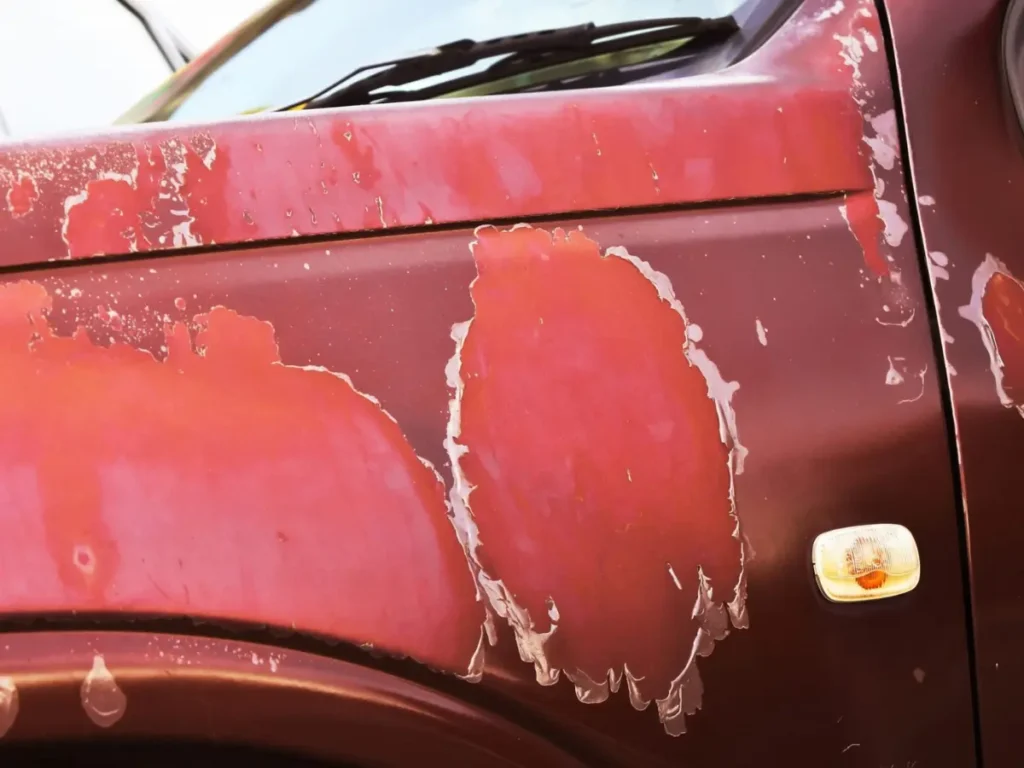
| Peeling, discoloration, or material transfer | Possible surface breakdown | Assessment for repair or replacement |
Location tells you a lot. A sticky patch in one spot near a cup holder or armrest usually points to something that landed there. Tackiness spread evenly across a whole panel is more likely tied to the material. Watch what happens after a careful cleaning, too. If the surface turns sticky again within days, the problem is probably in the coating rather than on it. Don’t scrape at it or rub hard to see what happens. Skip the urge to test stronger chemicals as well. Those experiments often leave marks you can’t undo.
How to Clean Sticky Car Surfaces Without Damaging Them
Cleaning works when the stickiness comes from something sitting on top of the surface. It can’t reverse a coating or plastic that is breaking down. Treat the steps below as general care guidance, since interiors vary from one vehicle to the next.
Check the Surface and Cleaner First
Start by figuring out what you’re touching. Hard plastic and vinyl don’t always react the same way as coated soft-touch trim. Your owner’s manual may list care instructions for the interior. Read the cleaner’s label too, and make sure it’s meant for the type of surface in your car. Then test it in a hidden spot, like the lower edge of a door panel. Let it dry and check for dulling or softening.
Remove Residue With Gentle Cleaning
Move on to the visible area only if the test spot looks fine. Then work slowly.
- Park in the shade and let the cabin cool down before you begin.
- Use a dry microfiber cloth or soft vacuum attachment to clear away loose dust.
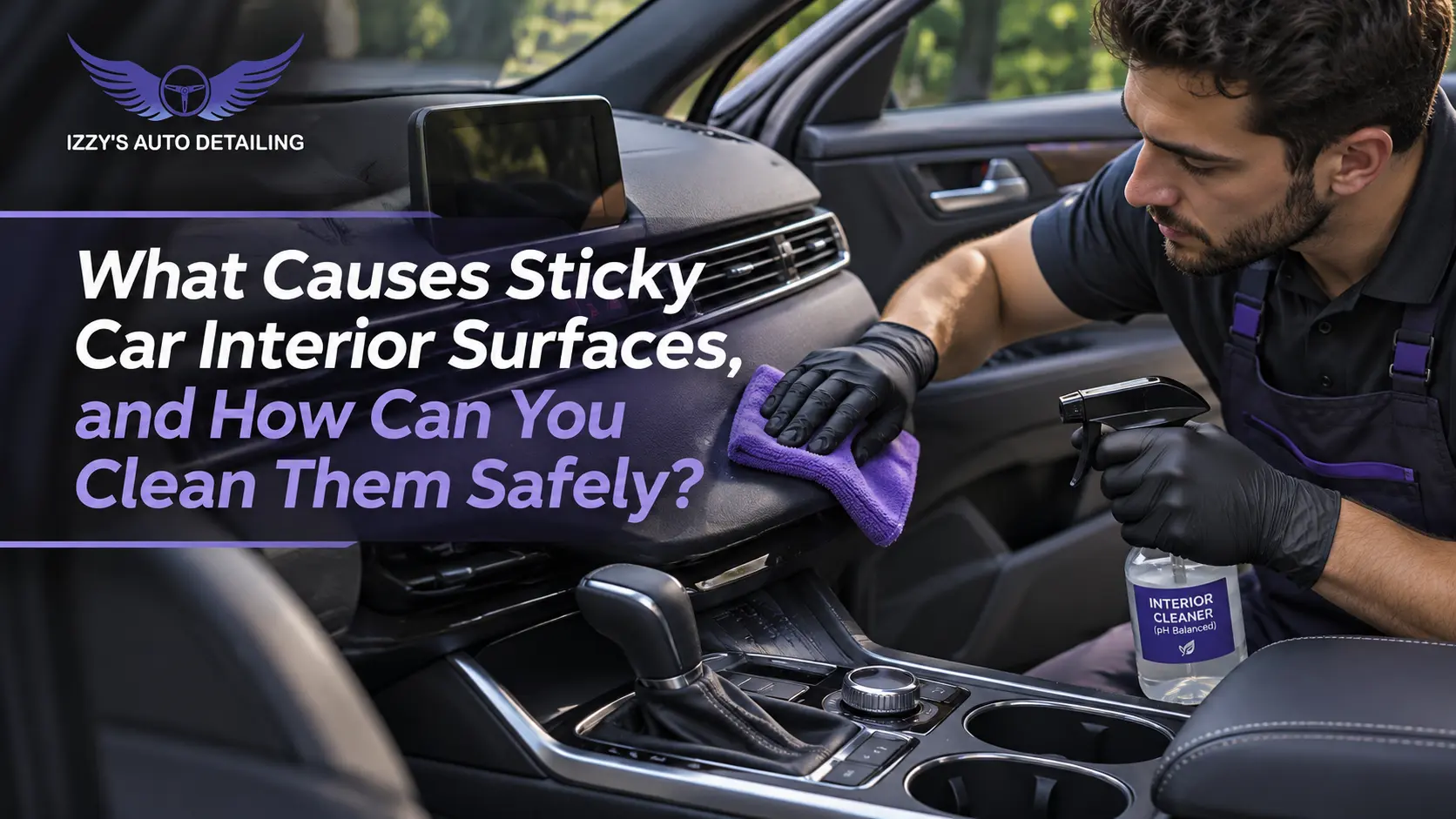
- Apply an automotive interior cleaner to a microfiber towel rather than spraying it directly onto the panel.
- Wipe one small section at a time with light pressure.
- Use a soft detailing brush on textured areas only if the material can handle it.
Wipe Away Leftover Product
Leftover cleaner can become the next sticky layer. Follow the label’s directions for removing it. In many cases, you’ll need to wipe the surface again with a clean microfiber towel. Don’t let cleaner dry on the panel. If some residue stays behind, make a second gentle pass. Two light rounds are safer than one hard scrub, which can wear through a delicate finish.
Cleaning Products and Methods That Can Make the Problem Worse
The wrong cleaner can turn a residue problem into a damage problem. Delicate interior finishes don’t forgive much. Steer clear of these mistakes:
- Harsh household solvents or homemade chemical mixtures not approved for car interiors
- Abrasive pads and melamine foam sponges on soft-touch or coated trim
- Stiff brushes and heavy scrubbing
- Soaking a panel with cleaner or letting product dry on it
- Cleaning hot surfaces or working in direct sun
Car makers use a wide mix of plastics and vinyls inside the cabin. Many parts also wear special coatings. A method that works fine in one car can dull or soften the trim in another. Checking the vehicle manual and the product directions takes a minute. It’s far more reliable than assuming one approach fits every interior.
When Sticky Car Interior Plastic Needs Repair or Replacement
There are surfaces that are sticky that cannot be restored to a normal state. If you think you have removed the residue properly and the panel still feels tacky, you need to remove it again. If the panel still has residue after you think you removed it correctly, you need to remove it again. It’s probably the material itself that has the issue. Other indicators are a soft or gummy coating. Be sure to notice peeling along the border or color loss from your cloth. If it is discolored or if the stickiness points, then it is the same way.
There are three different fixes: cleaning, refinishing, and replacement. Cleaning takes off what lies on the surface. Refinishing involves work on an existing surface that is damaged. Replacement involves the complete replacement of the trim. The one that is right depends on the kind of material and the extent of the damage. There are parts that can be refinished and others that are easier to replace. A proper assessment helps you avoid spending money on cleaners that can’t touch the real issue.
How to Reduce Sticky Buildup Inside Your Car
Simple habits go a long way toward keeping residue from building up. They won’t stop natural aging, but they do help with the preventable stuff.
- Wipe up spills before they dry.
- Pick interior products made for your car’s surfaces.
- Skip piling on extra coats of dressing or protectant.
- Use a sunshade and park in the shade when you can.
- Clean high-touch areas like door pulls and the console often.
Frequently Asked Questions
Here are quick answers to three common questions about tacky trim.
Why Does My Car Dashboard Feel Sticky Even After Cleaning?
Two reasons are most likely. The cleaner or a dressing may not have been fully wiped off, so it left its own film. The other possibility is a soft-touch coating that has started to break down. If a careful wipe with a clean towel doesn’t help, the coating is the more likely cause.
Can Rubbing Alcohol or Vinegar Remove Sticky Residue From Car Interiors?
They might lift some residue, but they aren’t safe on every material. Certain coatings and vinyls can dull or soften after contact with household products. Check your vehicle manual and the trim maker’s guidance before you try either one.
Can Heat and Sunlight Make Car Interior Plastic Sticky?
Yes, they can play a role. Heat and UV exposure speed up aging in many interior materials. Over the years, that can leave some plastics and coatings feeling tacky.
Final Thoughts
A sticky interior surface usually means one of two things. Either something is sitting on the material, or the material itself is starting to fail. Knowing which one you have tells you whether to clean it or have it looked at. Izzy’s Auto Detailing LLC is an auto detailing business based in Longmont, CO. It serves drivers throughout Longmont and Northern Colorado. Local car owners with questions about their vehicle’s interior can call 720-266-1760 to discuss their concerns.