Washing a car cleans it. It does not remove the swirl marks that show up in direct sun. Those fine scratches sit in the clear coat. The car paint correction stages exist to reduce them. The work starts with inspection. Then comes a test spot. After that, the detailer cuts and polishes as the paint demands. Skip the early steps, and the later ones turn into guesswork.
What the Paint Correction Process Is Designed to Improve
Paint correction levels the clear coat, the transparent layer over your color. Polishing removes a very thin amount of it. Think of sanding a rough board until it feels smooth. That makes the surface flatter, so light reflects evenly. The paint correction process targets defects that live in that layer:
- Swirl marks and fine wash marring
- Light scratches and surface imperfections
- Haze and oxidation that dull the gloss
Depth decides what works. If a scratch catches your fingernail, it has likely gone too deep for polishing alone. Polishing may soften it. It often will not erase it. A wash cannot do any of this. A filler-heavy product only hides marks for a while. Results depend on defect depth and paint condition.
How Detailers Assess Paint Before Correction Begins
Nobody should start with a polisher. Defect assessment comes first. It needs a clean surface and strong light. Grit hides flaws. Worse, it can scratch the paint under a spinning pad. A proper wash and decontamination remove that grit first. Only then does the real checking begin.
Inspect the Paint and Identify Defects
Grab an inspection light and walk the car. A bright handheld light exposes swirls and haze that overhead shop lighting hides. The detailer checks each panel. Swirls might cover the whole car. Deep scratches might sit on one door. Black paint shows every mark. White hides plenty. Those findings drive the plan, not a package name.
Check Paint Thickness and Perform a Test Spot
A paint thickness gauge reads the total paint layer, not the clear coat alone. Treat each reading as a clue. Factory paint varies by panel. A repainted panel can read very differently. One number never clears a panel for heavy correction. A gauge shows what is there. It cannot show what is safe to remove.
The test spot comes next. The detailer picks a small area and tests one setup there. That means one pad, one polish, one machine, and one technique. Then the inspection light comes out. If a lighter combination clears enough defects, nothing stronger is needed. If marks remain, the detailer steps up a little and tests again.
Car Paint Correction Steps from Cutting to Final Refinement
Not every car needs every step. Some need one pass. Some need three. Read these car paint correction steps as a menu, not a checklist. The test spot decides which items you order. A clean, lightly marked car may skip half of them. Nothing here is automatic.
Choose the Right Pad, Compound, and Polisher
Compound selection follows the test spot. A cutting compound uses stronger abrasives to level defects faster. A polishing compound refines. A finishing polish refines further. Pads matter as much as the liquid. A foam cutting pad bites harder than a soft finishing foam. A microfiber pad can cut aggressively when paired with a compound.
A dual-action polisher oscillates the pad, which makes it more forgiving. A rotary polisher spins on one axis. It cuts fast. It also builds heat, so it demands more skill. Neither wins every job. Technique counts for more than the tool. Rotary mistakes burn clear coat.
Perform the Cutting Stage When More Defect Removal Is Needed
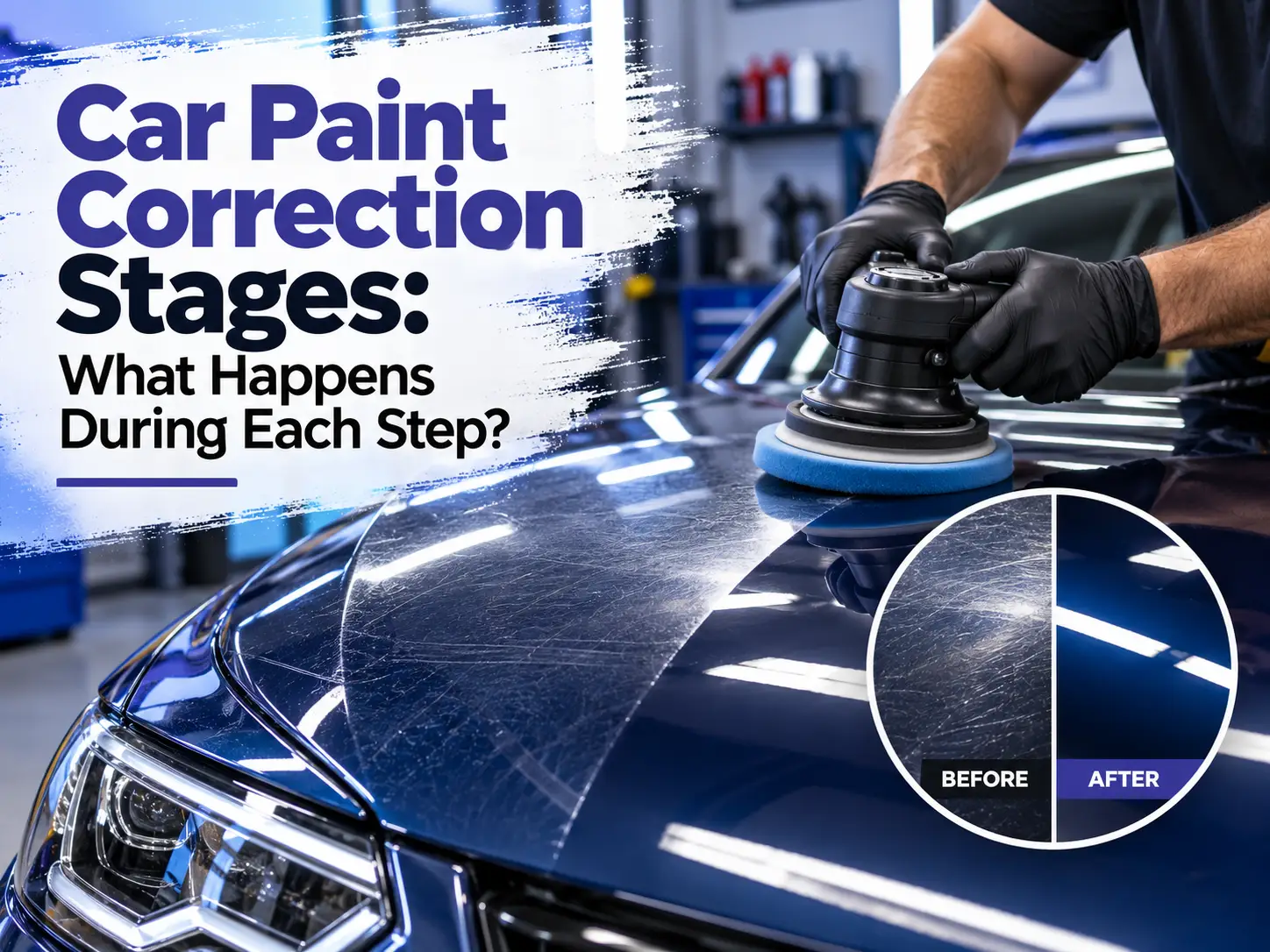
Cutting is the heavy stage. It happens only when the test spot shows lighter methods will fall short. The detailer works a cutting compound and pad across one section at a time. The abrasives level clear coat around each defect and make swirls less visible. Every pass removes clear coat. Some deeper scratches stay put because chasing them costs too much film. Plenty of cars never need a separate cutting stage.
Polish the Paint to Improve Clarity and Gloss
After a heavy cut, the surface is level but slightly hazy. A polishing compound on a softer pad clears that haze. It restores depth and gloss. Cutting removes defects. Polishing refines what cutting left behind. One-step approaches that correct and finish together are not inferior by default.
Refine the Finish and Inspect the Results
A refining stage adds one more pass when the finish still needs it. Dark paint often shows fine haze after the first polish. A finishing polish on a soft pad can clear it. Many jobs skip this stage. Lighter colors hide that haze, so the extra pass rarely pays off.
After each section, the detailer wipes the panel down with a microfiber towel. Polishing oils can fill marks and fake a good result. Then comes inspection under proper lighting. Did the swirls improve? Does haze or a polishing mark remain? Does it match the goal set during assessment? Honest improvement is the standard. Perfect paint is not.
What Single-Stage, Two-Stage, and Multi-Stage Correction Mean
Shops sell correction by stage count, but no universal rulebook defines each label. One shop’s two stages can be another shop’s one. So the label alone tells you little. The process behind it tells you more. Compare the work, not the name. The table shows the common meanings.
| Correction approach | Typical process | Common purpose | Important consideration |
| Single-stage correction | One selected polishing combination | Improve gloss and reduce suitable light defects | Deeper defects may remain |
| Two-stage correction | A stronger correction step followed by polishing or refinement | Address more noticeable defects while improving the finish | The paint must be suitable for the additional correction |
| Multi-stage correction | Several selected correction and refinement steps | Address more demanding paint conditions or pursue a more refined result | More stages do not automatically mean a better or safer outcome |
Stage count matters less than fit. A well-tested single stage can beat a rushed three. Multi-stage paint correction makes sense when defects are heavy. It also fits when the owner wants a very refined finish, and the paint can support more work. More passes are a tool, not a goal. Ask any shop which stages of paint correction a quote includes. Then ask why.
Why Paint Correction Should Progress Gradually
Clear coat does not grow back. That one fact drives the approach. Start with assessment and a test spot. Use the least aggressive combination that gives an acceptable result. Escalate only when the results justify it. Stronger correction brings more visible improvement. It also uses more clear coat. Chasing every defect can leave too little film for future work. Sometimes the smart move is leaving a deep mark alone.
What Happens After the Correction Work Is Complete
The last check comes after the last pass. The detailer inspects the paint again and notes any remaining defects. Then the detailer clears polishing residue from trim edges and panel gaps. Bonded contamination should already be gone before polishing starts. That is why the car paint decontamination process comes first.
Protection comes after correction, and the jobs differ. Correction changes how the paint looks. A wax, sealant, or ceramic coating guards it. Protection does not repair defects underneath. It seals the paint as it is, swirls included. That is why the order matters. Correct first. Protect second.
Frequently Asked Questions
How Many Stages of Paint Correction Does a Car Need?
It depends on the paint. Defect severity matters, and so do the test spot results. Your goal for the finish counts too. Lightly marked paint may need one stage. Heavily marred paint may need two or more. Ask the detailer why they chose their number. A clear answer is a good sign.
Does Multi-Stage Paint Correction Remove Every Scratch?
No. Polishing levels the clear coat. It can only address defects within the layer that can be removed safely. Deep scratches may remain or only look softer. Nobody can promise that every mark will disappear. Be wary of anyone who does. Honest detailers set expectations before they start.
Is Paint Correction Necessary Before Ceramic Coating?
Not automatically, but it often helps. A ceramic coating adds protection and gloss. It does not remove swirls or scratches. Correcting suitable defects first means the coating covers the best finish the paint can offer. A coating over swirls locks them in. A coating over corrected paint shows off the work.
Choosing the Right Paint Correction for Your Vehicle
Automotive paint correction works best when the plan follows the paint, not a price list. Four things decide the right approach. The condition of the paint. The defects present. The test spot results. The finish you want. A package name cannot tell you any of that.
Izzy’s Auto Detailing LLC is based in Longmont, Colorado. We offer auto paint correction and machine polishing services. If you want an honest and precise evaluation of your vehicle’s clear coat, schedule an in-person paint assessment. The team will inspect your paint under specialized lighting and conduct a test spot to show you what results can be safely achieved. Call 720-266-1760 today to schedule your assessment.