Your car got coated, so you might figure the hard part is behind you. Not quite. A ceramic coating helps dirt let go of the paint and makes every wash easier, but it won’t clean the car for you. Good ceramic coating maintenance comes down to a handful of habits. Wash on a steady schedule with coating-safe products and dry the car carefully. Clean off contaminants before they bake in, and check how the surface performs now and then. Do that, and the coating keeps doing the job you paid for. No routine on earth stops every rock chip, scratch, or stain.
Build a Maintenance Routine Around Your Driving Conditions
Forget the one-size-fits-all calendar you saw online. Your car’s needs depend on where it lives and where it goes each day. A garage-kept weekend car and a daily commuter parked under a tree live very different lives. Start with your own week, then build the plan from there.
Decide How Often to Wash
Look at your normal week before you pick a schedule. Highway miles throw bugs and road film at the bumper and mirrors. Rain leaves spots once it dries. Colorado winters bring treated roads and slushy grime, so wash sooner. Don’t wait for the calendar if something nasty sits on the paint.
Keep Routine Care Simple
Wash it when it needs washing. Rinse loose dirt off before anything touches the paint. That’s how to maintain ceramic coating without turning it into a second job. Gentle and regular beats rare and rough. A hard scrub after months of buildup does far more harm.
Choose Products and Washing Methods That Protect the Surface
A coating is not armor, and it never was. Grit trapped in a dirty mitt can still drag across a panel and leave fine swirl marks. Your wash method matters as much as how often you wash. Keep the mitt clean and the paint stays smooth.
Use a Coating-Compatible Shampoo
Start with a pH-neutral car shampoo or one your coating maker approves. That’s the safe default for any ceramic-coated car wash. Keep dish soap and household degreasers inside the house. You don’t need a “ceramic” label on every bottle. Plenty of pH-neutral automotive shampoos work fine.
Use Clean Tools and a Controlled Wash Method
Grab a clean microfiber wash mitt and two buckets. One holds soapy water. The other holds plain water for rinsing grit out of the mitt between panels. Work in small sections from the roof down with light pressure. Dropped the mitt? Set it aside and grab a clean one.
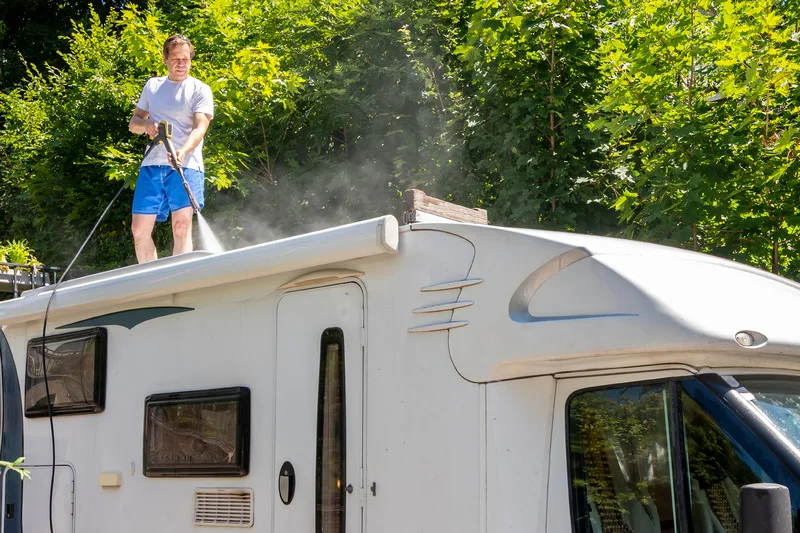
A pressure washer helps if you already own one. Use it to blast off loose dirt before you touch the car. Use it again for the final rinse. Keep a safe distance and pick a setting that suits your machine and vehicle. Skip stiff brushes and old sponges. They’re swirl-mark makers.
Finish With a Thorough Rinse
Rinse the whole car before the soap dries. Dried shampoo leaves a film. Leftover dirt ends up under your towel. Check the trim edges, mirror housings, and door seams, where residue likes to hide. A slow, full rinse takes a few extra minutes. It saves you a second pass.
Dry the Vehicle Before Minerals Leave Their Mark
The wash isn’t finished when the hose shuts off. Water left on the paint evaporates, and its minerals stay behind. Hard water makes the problem worse. Those spots get stubborn if they sit too long. Dry the car soon after rinsing, and you avoid most of them.
Use a Gentle Drying Technique
Use a clean, plush microfiber drying towel for this step. Lay it flat and pat the panel. Or glide it slowly with almost no pressure. Only dry a car that has been rinsed well. Any grit left behind gets dragged along with the towel. That’s how fine scratches start.
Reduce Water-Spot Risk
Wash and dry in the shade whenever you can. Hot panels and direct sun speed up evaporation. If spots keep coming back from mineral-heavy water, try filtered or deionized rinse water. None of this guarantees a spot-free finish every time. It simply stacks the odds in your favor.
Deal With Contamination Before It Becomes Difficult to Remove
Coated paint releases grime more easily, but some things still cling through a normal wash. Deal with them early, and you will avoid harsher cleaning later. Waiting only makes the job harder and slower.
Address Fresh Contaminants Carefully
Bird droppings cause trouble fast. So do bug splatter and tree sap. Get to them as soon as you spot them. Soften the spot with a coating-compatible product and give it a moment to work. Then lift it away with a soft microfiber. Sun makes the mess harder to remove, so speed matters.
Recognize Mineral Deposits and Bonded Contamination
Loose dirt rinses right off. Bonded contamination stays put. After a proper wash, run a clean hand lightly over the paint. Rough spots or water marks that refuse to budge mean something is stuck to the surface. A product made for coated finishes may help. If not, call a professional before trying anything stronger.
Check Coating Performance Before Adding More Products
Water behavior gives you clues about the coating. So does how easily the car cleans up. Neither one alone tells you how much coating is left on the paint. Treat them as signals to investigate, not final answers. A quick look first can save you money on products you never needed.
Understand Changes in Water Beading and Sheeting
A hydrophobic surface pushes water away instead of letting it cling. You may see tight beads or water that slides off in sheets. Both can be normal, depending on your coating. Weaker beading is a reason to look closer, not proof of failure. Road film or mineral buildup can hide a healthy coating’s water behavior.
Know When a Maintenance Wash Is Enough
Before you buy anything new, give the car a careful wash with compatible products. Then rinse one panel and watch what the water does. If it behaves better, surface contamination was likely the culprit. If performance stays weak after a proper cleaning, book a coating inspection.
Use a Coating Topper Only When It Serves a Purpose
Toppers have their place, but they aren’t a required step. A good maintenance spray can boost water repellency and slickness on a compatible coating. You don’t need one after every wash. Think of it as an occasional boost, not a habit. Used with some thought, it adds value.
Check Compatibility Before Applying a Topper
Follow the advice from your coating maker and your installer. A ceramic maintenance spray is not the professional coating on your paint. It’s a light layer that sits on top. The wrong product can leave streaks or sticky buildup. So can too much of the right one.
Avoid Treating Every Performance Change With Another Layer
Clean the car first. Then decide whether a topper makes sense. Spraying a booster over a dirty surface can hide the real problem without fixing it. No topper turns a worn coating back into a fresh one. Only a proper inspection can tell you where the coating stands.
Understand What Routine Maintenance Can and Cannot Do
A coating protects your paint, but it is not a force field. A smart plan keeps the finish in good shape without expecting miracles. Routine care does real work every time you wash. Here’s the honest split between what maintenance can do and what it can’t.
- Maintenance can help: clear routine dirt, limit contaminant buildup, keep the car easy to clean, and support the coating’s hydrophobic behavior.
- Maintenance can’t guarantee protection from rock chips, scratches, every chemical stain, or damage from neglect.
Get the car inspected if spots linger, the paint feels rough, or water behavior stays weak after proper cleaning. Reapplying a coating is a separate decision. It should depend on the coating’s real condition. A technician’s assessment matters more than a hunch. Let the facts lead the decision.
Frequently Asked Questions
How Often Should You Wash a Ceramic-Coated Car?
There’s no universal number that fits every car. Where you drive and where you park both matter. Set a consistent schedule. Then adjust it to your real conditions. A garage-kept car may go longer between washes. A commuter parked outside may need a wash sooner than you’d expect.
Can You Use Regular Car Shampoo on Ceramic Coating?
Use a pH-neutral or coating-compatible automotive shampoo that matches your coating maker’s guidance. Plenty of regular car shampoos fit that description. Check the label. Household cleaners and dish soap are never good substitutes. They can be harsher than your finish needs. Stick with products made for cars.
Does Weak Water Beading Mean the Ceramic Coating Has Failed?
Not necessarily. Dirt and mineral deposits can hide how a healthy coating handles water. Give the car a proper wash first. If beading stays weak, get an inspection before assuming you need a new coating. A pro can read the surface far better than a guess can.
Final Thoughts
Ceramic coating care doesn’t call for a shelf full of products. It calls for a steady routine you can actually keep up. Wash safely. Dry carefully. Handle contaminants quickly. Check performance before you reach for a topper. It still can’t stop every chip or scratch.
Want a second set of eyes on your coating, or professional care for your car? Izzy’s Auto Detailing LLC provides ceramic coating services in Longmont and the surrounding Denver Metro area. Reach out with your questions anytime. We’ll help you figure out what your car needs.